E-mail seo@sino-purification.com

Time:2026-04-23 13:50:07 Reading volume:
Key Takeaways:
The dehydration accuracy of an oil purifier depends on the equipment type and technology level. Mainstream systems can reduce water content in oil to ≤100 ppm, while high-performance units can achieve ≤50 ppm or even lower. Specialized models are available for extremely high water content scenarios. These capabilities meet the strict oil purity requirements of most industrial equipment—often exceeding new oil standards.
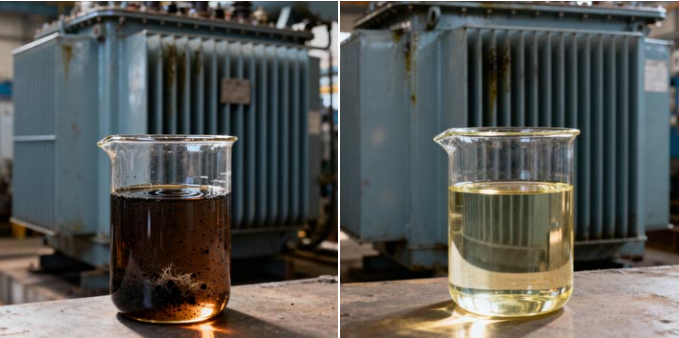
Dehydration accuracy is measured in ppm (parts per million). The lower the number, the drier and cleaner your oil. Currently, the industry recognizes two main accuracy tiers, plus a specialized solution for challenging conditions.
This is the industry standard for most coalescing separation oil purifiers and serves as the benchmark for routine industrial oil maintenance.
Results: Oil becomes clear and transparent with no emulsion cloudiness. The demulsibility value drops to within 15 minutes, ensuring fast oil-water separation and preventing oil degradation.
Applications:
Suitable for hydraulic oil, turbine oil, lubricating oil, and most
other industrial oils. Effectively prevents oil emulsification, protects
equipment from moisture damage, and reduces failure rates.
Industry
data shows that using such equipment cuts equipment failure incidents
by 60% and extends maintenance intervals to over 3 months.
For precision equipment or deep oil reclamation, vacuum oil purifiers achieve this higher standard.
How it works: Leverages the different boiling points of water and oil. Under vacuum, it gently heats the oil (without harming its composition) to remove moisture.
Results: Lowers water content to below 50 ppm—some models can go even lower.
Added benefit: Simultaneously removes dissolved gases from the oil, which coalescing separators cannot do. This fully restores oil properties and extends oil life.
When oil is severely contaminated (water content exceeds 20%), standard purifiers struggle. A high-capacity coalescing separator is required. This equipment efficiently handles large volumes of free water to quickly reduce moisture levels, with final accuracy typically reaching ≤100 ppm. These units are ideal for heavy contamination scenarios in industries like steel manufacturing and shipping.
| Oil Purifier Type | Typical Final Water Content | Key Advantages | Main Limitations | Best For |
|---|---|---|---|---|
| Coalescing Separator | ≤100 ppm | No heating (energy efficient), won't alter oil properties, continuous operation, easy maintenance | Limited removal of dissolved water, cannot remove gases | Routine industrial oil maintenance (hydraulic oils, lubricants) |
| Vacuum Purifier | ≤50 ppm or lower | Complete water and gas removal, fully restores oil properties, handles precision applications | Higher equipment cost, greater energy use, requires heating | Precision equipment, deep oil reclamation, moisture-sensitive systems |
| Hydraulic Oil Filter | ≤100 ppm | Simple design, portable, low cost, easy to operate | Single function, lower final cleanliness vs. other types | Small hydraulic systems, mobile/on-site needs |
In addition to water content, oil cleanliness—measured by NAS (National Aerospace Standards) level—is critical. Higher cleanliness means better protection for your equipment.
Mainstream coalescing separators: Improve cleanliness to NAS 4–6, meeting normal industrial needs.
High-performance vacuum purifiers: Achieve NAS 4 or better, suitable for precision servo systems and other ultra-clean applications. Some models offer filtration down to 5 microns or smaller.
Use this quick guide based on your primary goal:
| Your Goal | Recommended Type | Why |
|---|---|---|
| Routine maintenance & preventing emulsification | Coalescing separator | ≤100 ppm accuracy, cost-effective, low energy use, ideal for most industrial settings—great for SMBs |
| Severely emulsified oil or deep reclamation | Vacuum purifier | Reduces water to ≤50 ppm, removes gases, fully restores oil performance, reduces oil change costs. Ideal for steel, auto parts, and other heavy-contamination industries |
| Moisture-sensitive equipment (servo systems, aviation) | Vacuum purifier (mandatory) | Ensures ≤50 ppm accuracy and high NAS cleanliness. Prevents wear and failure. Some models achieve ≤5 ppm for ultra-demanding applications |
A: Not necessarily. For typical industrial use, ≤100 ppm is sufficient. Chasing higher accuracy increases both equipment cost and energy consumption. Save ≤50 ppm (vacuum) systems for precision or deep reclamation needs.
A: Not recommended. First, use a high-capacity coalescing separator to remove the bulk of free water. Then follow up with a vacuum purifier for final polishing. This approach ensures efficiency and final oil quality.
A: Generally, higher accuracy means slower throughput. Vacuum purifiers require heating and vacuum processing, making them more thorough but slower. Always balance accuracy with flow rate to match your oil volume needs.
Final Selection Tip:
When choosing an oil purifier, consider not only dehydration accuracy but also your oil type (hydraulic, transformer, gear, etc.), actual water content, and required flow rate. If you can share your specific oil type and current moisture level, a more precise recommendation can be provided—helping you reduce maintenance costs and extend oil life.
Explosion-Proof Oil Purifier Selection Guide: Which Working Conditions Require One?
How to Prevent Rapid Lubricating Oil Degradation in Steel Mills
Can an Oil Purifier Remove Acid? Understanding the Limits of Oil Regeneration
Chemical Industry Oil Purification: How to Choose the Right Oil Purifier
Why Is Coalescing Water Removal More Stable Than Vacuum Dehydration?


