E-mail seo@sino-purification.com

Time:2026-04-11 13:45:15 Reading volume:
Executive Summary
In industrial maintenance, oil is the "lifeblood" of your machinery. Whether you are managing transformer oil, turbine lubricants, or hydraulic fluids, the efficiency of your oil purifier directly impacts your asset’s ROI and operational safety. This guide breaks down the five essential dimensions for vetting manufacturers, moving beyond surface-level marketing to help you identify high-performance engineering partners.
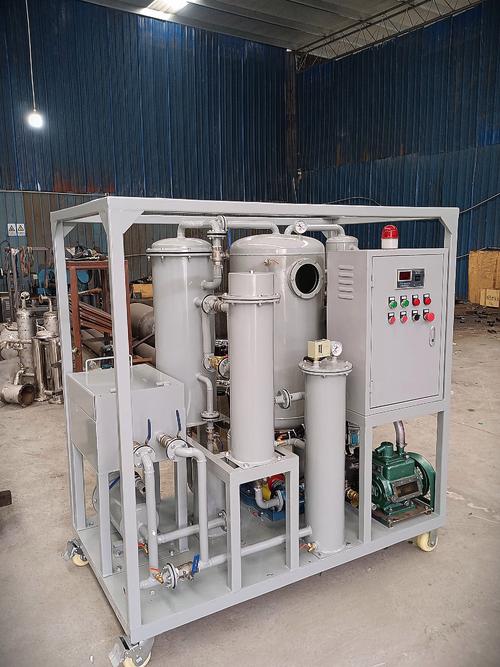
A manufacturer's worth is defined by their mastery of fluid dynamics and vacuum technology, not just assembly skills.
Vacuum System Efficiency: Look for Three-Dimensional Flash Evaporation technology. This ensures a larger surface area for moisture and gas release, which is critical for reaching low PPM levels.
Target Parameters: A reputable manufacturer should guarantee specific outcomes, such as:
Moisture Content: Reducing water from 50ppm to <5ppm.
Dielectric Strength (BDV): For transformer oil, improving breakdown voltage to >70kV.
Gas Content: Reducing air/gas content to <0.1%.
Automation (PLC): Modern units should feature PLC integration (e.g., Siemens or Omron) with sensors for real-time moisture monitoring and automatic foam control.
The harsh environment of high temperatures (60°C–80°C) and high vacuum will quickly degrade inferior equipment.
Vessel Construction: Demand Stainless Steel (304/316) for all wetted parts. Carbon steel with internal coating is prone to peeling, which can contaminate your oil and damage the machine.
Premium Component "Pedigree": Verify the brands used for critical parts.
Vacuum Pumps: Leybold, Edwards, or Busch.
Electricals: Schneider, ABB, or Siemens.
Sealing Technology: Ensure the use of Viton (FKM) seals, which offer superior resistance to high-temperature oil compared to standard NBR rubber.
Industrial safety is non-negotiable. A manufacturer must prove their equipment meets global safety and environmental protocols.
ISO 9001 & 14001: The baseline for quality and environmental management.
CE & ASME Certification: Essential for European and North American markets to ensure pressure vessel safety and electrical compliance.
Explosion-Proof Ratings: If your facility is in the petrochemical or mining sector, the manufacturer must hold valid ATEX or IECEx certifications.
Factory Acceptance Testing (FAT): A high-quality manufacturer always provides a comprehensive FAT report, including pressure tests and oil-cleansing efficiency data.
Experience in your specific niche (e.g., Power Utilities vs. Marine) is a major differentiator.
Tier-1 Client Base: Does the manufacturer supply to national grids, major oil companies (like Shell or Exxon), or international industrial groups?
Niche Expertise: Can they handle complex fluids? Ask for case studies involving high-viscosity gear oils, EHC fire-resistant fluids, or heavily emulsified turbine oils.
Global Export Capability: Manufacturers with a strong presence in the Middle East, Southeast Asia, and North America demonstrate that their designs meet diverse climate and regulatory requirements.
The initial purchase price is only 30% of the total cost. The remaining 70% is maintenance and consumables.
Technical Support: Do they offer 24/7 remote diagnostics? How fast can they deploy a technician for on-site commissioning?
Consumable Transparency: Some manufacturers sell cheap machines but overcharge for proprietary filters. Check the dirt-holding capacity and the replacement cost of their filter elements upfront.
Training Resources: Ensure they provide detailed operation manuals, troubleshooting videos, and on-site staff training.
| Criteria | Weight | What to Look For |
| Technical Parameters | 30% | BDV, PPM, and Vacuum Pa ratings. |
| Material Build | 25% | SS304/316 usage and pump brands. |
| Certifications | 15% | ISO, CE, Explosion-proof (ATEX). |
| Market Reputation | 15% | Global references and industry longevity. |
| After-Sales Service | 15% | Filter availability and response time. |
When selecting an oil purifier manufacturer, always request a live or video-led performance test with an oil sample similar to yours. A manufacturer who is confident in their engineering will never hesitate to prove their "numbers" in a real-world scenario.
Explosion-Proof Oil Purifier Selection Guide: Which Working Conditions Require One?
How to Prevent Rapid Lubricating Oil Degradation in Steel Mills
Can an Oil Purifier Remove Acid? Understanding the Limits of Oil Regeneration
Chemical Industry Oil Purification: How to Choose the Right Oil Purifier
Why Is Coalescing Water Removal More Stable Than Vacuum Dehydration?


