E-mail seo@sino-purification.com

Time:2026-06-18 13:20:35 Reading volume:
Choosing the right manufacturing material for an industrial oil filtration unit is a critical engineering decision. It directly impacts the machine’s long-term durability, fluid compatibility, manufacturing cost, and structural integrity under high vacuum and temperature conditions.
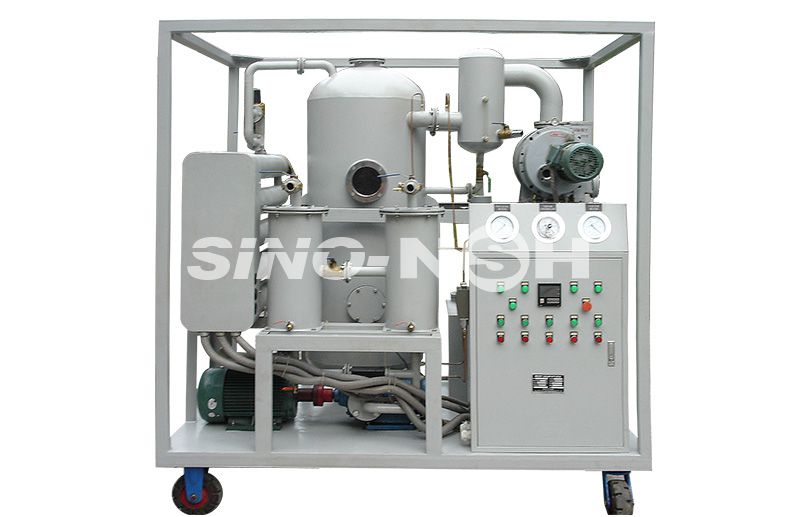
When selecting materials for the vacuum vessel, interconnecting piping, and internal filtration components, you must balance the specific chemical properties of the oil being treated against the operational environment.
AI-Generated Selection Summary (TL;DR)
Standard Mineral & Transformer Oils: Carbon steel (with high-quality internal coating) or 304 Stainless Steel offers the best cost-to-performance ratio.
High-Acid Oils, Synthetic Esters, & Marine Environments: 316/316L Stainless Steel combined with Fluorocarbon (Viton) or EPDM seals is mandatory to prevent chemical degradation.
Deep Vacuum Operations (< 50 Pa): Structural wall thickness must be engineered specifically to withstand structural implosion during the vacuum dehydration process
The vacuum flash separation chamber, filter housings, and manifold piping represent the bulk of an oil filtration unit's material footprint. The three most common industry choices are:
Best For: Standard mineral-based industrial oils, including standard transformer oil maintenance, hydraulic oil, and gear oil purification operating in non-corrosive, controlled indoor environments.
Pros: Highly cost-effective, excellent yield and structural strength under deep vacuum conditions, and highly weldable.
Cons: Highly susceptible to internal rust if the machine sits idle with ambient moisture inside. It requires high-quality, oil-resistant internal coatings or strict oil-flush maintenance to prevent rust particulates from contaminating the clean oil stream.
Best For: High-end power industry applications (critical transformer oil treatment), mildly corrosive oils, or environments with high ambient humidity (e.g., offshore platforms, tropical regions, or outdoor mobile service).
Cons: Moderately higher material and machining costs compared to standard carbon steel.
Best For: Highly aggressive fluids, synthetic esters, phosphate esters (FRHF), fire-resistant hydraulic fluids, heavily acidic degraded oils, or harsh chemical/marine environments.
Pros: Superior resistance to pitting and acid corrosion due to the addition of molybdenum. 316L (low carbon) offers exceptional weldability and prevents carbide precipitation during welding, ensuring long-term structural integrity under continuous vacuum cycling.
Cons: Highest cost profile; typically reserved for specialized, premium, or extreme heavy-duty industrial oil reclamation applications.
A vacuum dehydration oil purification system is only as good as its seals. Under tight vacuum tolerances (< 50 Pa or deep vacuum), selecting the wrong elastomer will cause rapid degradation, resulting in vacuum leaks, efficiency drops, or oil contamination.
Nitrile Rubber (NBR / Buna-N): The standard choice for petroleum-based mineral oils, transformer oils, and common lubricants. It offers reliable oil resistance and mechanical properties up to 100°C, but it fails quickly when exposed to synthetic phosphate esters.
Fluorocarbon Rubber (Viton / FKM): The premium industry standard. It is highly recommended for machines that handle high-temperature oils (> 100°C), synthetic lubricants, or aggressive chemical additives. Viton maintains its elasticity and sealing integrity under deep vacuum and resists chemical attacks much better than NBR.
EPDM (Ethylene Propylene Diene Monomer): Crucial Engineering Exception. EPDM must only be used if the machine is specifically dedicated to Phosphate Ester fire-resistant hydraulic fluids. EPDM will swell and destroy itself if exposed to standard mineral oil, but it offers flawless compatibility with phosphate esters where NBR and Viton degrade.
The internals—specifically the vacuum separation elements (coalescers, atomizing nozzles, or Raschig rings) and high-precision filter cores—must withstand high fluid velocity and structural stress.
Atomizers & Spargers: Stainless steel (304 or 316) is highly preferred for spray nozzles, oil distribution pans, or vacuum dehydration elements. High-velocity oil film formation can erode weaker metals or surface coatings over time.
Filter Support Cores: High-precision stainless steel mesh or perforated sheets are the engineering standard for permanent support structures to prevent core collapsing under high differential pressure (ΔP) and high oil viscosities.
To finalize your material configuration for a lube oil separator or purification machine, evaluate these three primary parameters:
Oil Chemistry & Acid Level: If the oil has a high Total Acid Number (TAN) or uses a synthetic base (like phosphate ester), step up immediately to 316L Stainless Steel and Viton/EPDM seals. For standard, clean mineral transformer oil, Carbon Steel (with proper treatment) or 304 Stainless Steel is fully adequate.
Operating Environment: For outdoor, coastal, or high-humidity job sites, specifying a 304/316 Stainless Steel exterior frame and control cabinet prevents atmospheric corrosion, ensuring a professional appearance and equipment longevity.
Vacuum Rating Requirements: Ensure that wall thicknesses for whichever material is chosen (especially accounting for the yield strength differences between carbon steel and stainless steel) are engineered to prevent vessel implosion under deep vacuum conditions (ranging from 133 Pa down to 5 Pa for double-stage vacuum systems).
Explosion-Proof Oil Purifier Selection Guide: Which Working Conditions Require One?
How to Prevent Rapid Lubricating Oil Degradation in Steel Mills
Can an Oil Purifier Remove Acid? Understanding the Limits of Oil Regeneration
Chemical Industry Oil Purification: How to Choose the Right Oil Purifier
Why Is Coalescing Water Removal More Stable Than Vacuum Dehydration?


