E-mail seo@sino-purification.com

Time:2025-02-24 09:59:57 Reading volume:
A turbine oil purifier removes water through a combination of coalescence, gravity separation, and vacuum dehydration. The appropriate method depends on whether the turbine oil contains free water, emulsified water, or dissolved moisture. Effective water removal helps maintain oil quality and protect critical turbine components.
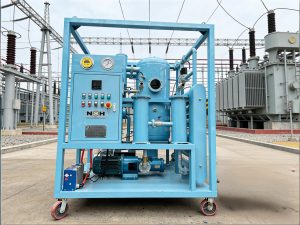
When turbine oil contains free water or dispersed water droplets, a coalescing filter element helps combine smaller droplets into larger ones. These larger droplets can separate from the oil more easily and settle under gravity, allowing the collected water to be drained from the system.
A water-separation element may also be used to help prevent separated water from passing through with the oil. Its effectiveness depends on the element design, oil properties, and operating conditions.
Coalescence and gravity separation may not be sufficient when water is finely dispersed or dissolved in the oil. In these cases, a vacuum turbine oil purifier can use reduced pressure and controlled heating to promote water evaporation.
Under vacuum conditions, water evaporates at a lower temperature than it would at atmospheric pressure. The resulting water vapor is removed through the vacuum system, reducing the moisture content of the processed oil. This method is particularly useful when turbine oil requires deeper dehydration.
Water contamination can reduce the lubricating reliability of turbine oil, promote corrosion, accelerate oil degradation, and contribute to bearing wear. Excessive moisture can also increase the risk of operating problems in steam turbines and other industrial equipment.
Regular oil condition monitoring helps determine whether water removal is necessary and whether the purification process is performing effectively. Water content should be checked against the equipment manufacturer's requirements and the applicable oil specifications.
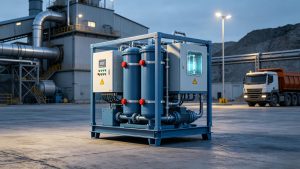
The right turbine oil filtration system depends on the type and concentration of water contamination, the oil's viscosity and condition, the required processing capacity, and the target moisture level.
For oil containing substantial free water, gravity separation or a suitable coalescing stage may be effective. When dissolved moisture or persistent fine water contamination is a concern, vacuum dehydration may be more appropriate. Some systems combine multiple treatment stages to address different contamination conditions.
Before selecting equipment, evaluate the actual oil condition and required treatment results rather than relying on processing capacity alone.
A properly selected turbine oil purifier helps control moisture, maintain turbine oil performance, and extend oil service life when supported by appropriate monitoring and maintenance.
Why Different Oil Types Cannot Always Use the Same Oil Purifier
Explosion-Proof Oil Purifier Selection Guide: Which Working Conditions Require One?
How to Prevent Rapid Lubricating Oil Degradation in Steel Mills
Can an Oil Purifier Remove Acid? Understanding the Limits of Oil Regeneration
Chemical Industry Oil Purification: How to Choose the Right Oil Purifier


