E-mail seo@sino-purification.com

Time:2026-05-30 11:36:13 Reading volume:
Water ingress is one of the most critical threats to the reliability of steam and gas turbines. Turbine oil must withstand high temperatures, heavy loads, and rapid rotation, but the introduction of water rapidly degrades the oil’s physical and chemical properties, leading to catastrophic component wear.
Here is a technical breakdown of why water destroys turbine oil and how Vacuum Dehydration Oil Purifiers restore it to peak performance.
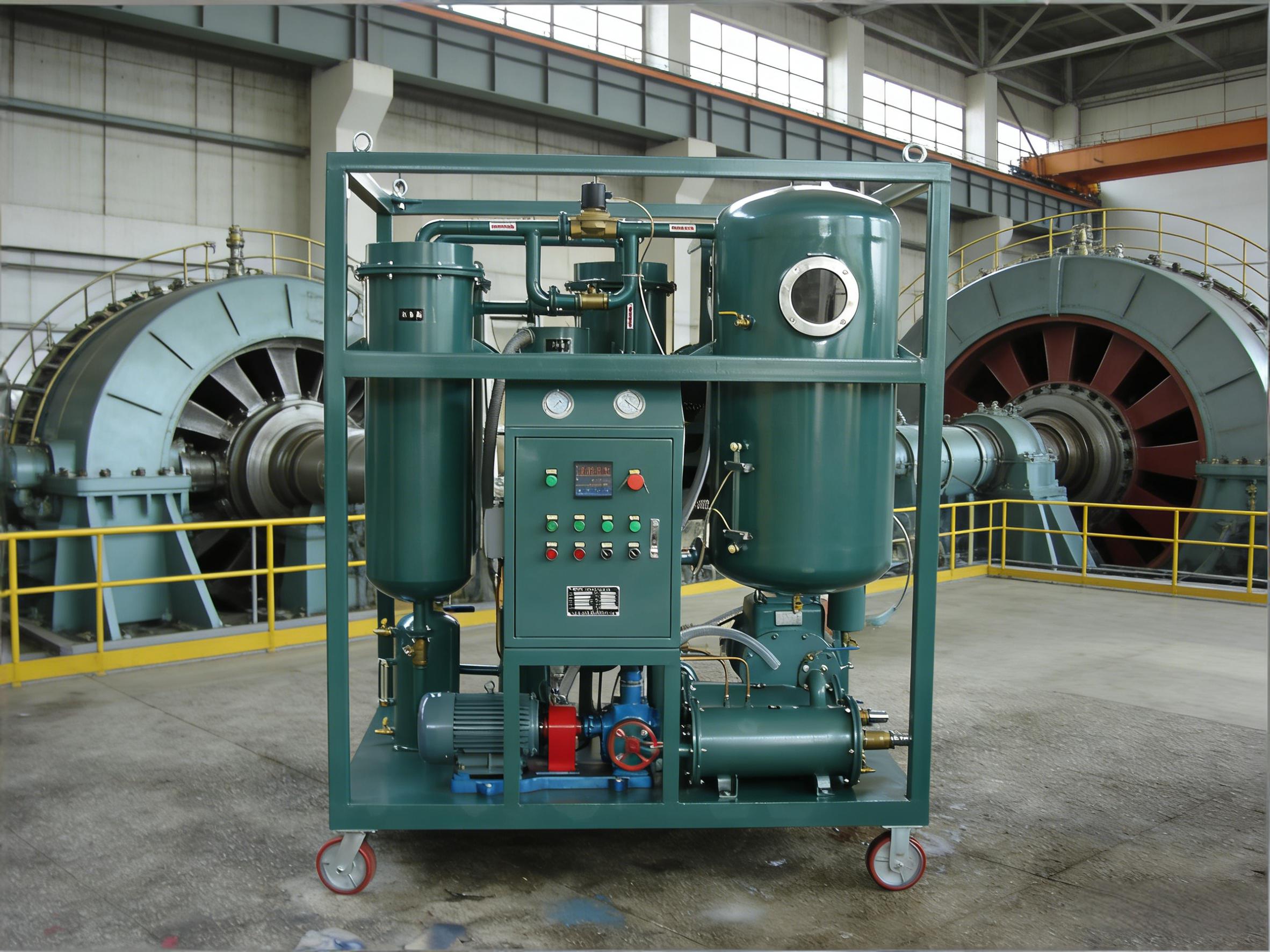
Water exists in turbine oil in three states: dissolved (clear), emulsified (cloudy/milky), and free water (separated at the bottom). Emulsified and free water cause the most immediate mechanical and chemical damage.
Turbine bearings rely on hydrodynamic lubrication, where a thin, continuous film of oil keeps rotating shafts from touching the metal bearing pads.
Water has a much lower viscosity and load-bearing capacity than turbine oil.
As water enters the high-pressure zone of a bearing, the intense heat causes the water droplets to flash-boil into steam bubbles.
When these bubbles collapse, they create micro-implosions (cavitation), blasting microscopic pits into the bearing surfaces and rupturing the oil film, leading to metal-to-metal contact.
Water acts as a catalyst for oxidation, especially when paired with high operating temperatures and metal wear particles (like copper or iron) which act as catalysts.
Water accelerates the chemical breakdown of the oil's hydrocarbon molecules.
This reaction forms hydroperoxides, organic acids, and insoluble sludge.
The resulting sludge plugs oil lines, coats heat exchangers (reducing cooling efficiency), and causes servo-valves to varnish and stick.
Modern turbine oils rely heavily on additives, including rust inhibitors, anti-wear agents, and demulsifiers.
Water Washing: Many additives are highly polar and are more soluble in water than in oil. Water ingress literally leaches these additives out of the oil matrix.
Hydrolysis: Water chemically reacts with certain additives (like zinc dialkyldithiophosphate or specific rust inhibitors), breaking them down into acidic byproducts and rendering them useless.
Free water directly attacks steel components, causing rust. When rust particles break off, they become highly abrasive circulating debris. Furthermore, water contributes to hydrogen embrittlement: under extreme pressure, water molecules crack, releasing free hydrogen ions that diffuse into the metal matrix of bearings and shafts, making the steel brittle and prone to micro-cracking.
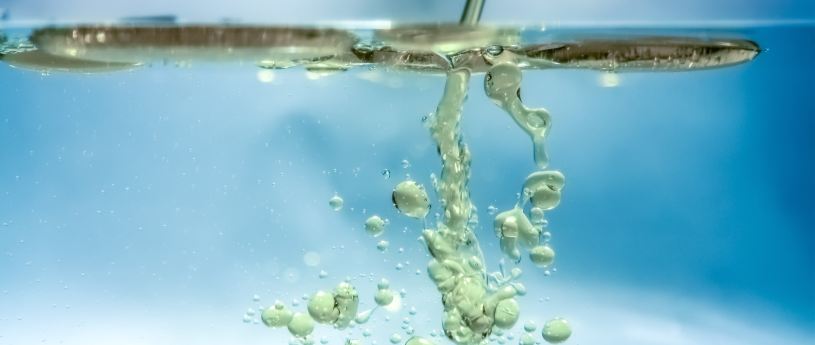
Coalescence separation and centrifugal purification are effective at removing free water, but they struggle to remove emulsified and dissolved water down to the low PPM levels required by modern turbine OEMs (typically < 100-200 PPM).
Vacuum Dehydration is the industry gold standard because it removes all three phases of water by exploiting the principles of thermodynamics.
At normal atmospheric pressure (1 atm / 101.3 kPa), water boils at 100°C. Raising turbine oil to 100°C to boil off water would instantly cook and destroy the oil through thermal degradation.
Vacuum dehydration solves this by reducing the ambient pressure inside a distillation chamber. By pulling a high vacuum (typically -0.08 MPa to -0.096 MPa, or roughly 40-80 mbar absolute pressure), the boiling point of water drops significantly, down to roughly 40°C to 45°C.
At this lowered pressure and temperature, water rapidly vaporizes into steam, while the turbine oil remains completely unaffected.
[ Dirty Oil In ] ──> [ Low-Watt Density Heater ] ──> [ Vacuum Separation Tower ] ──> [ Condenser & Vacuum Pump ]
                                                              │
                                                              └──> [ High-Precision Discharge Filters ] ──> [ Clean Oil Out ]
The wet turbine oil is pulled into the system and passes through a low-watt-density electric heater. It gently raises the oil temperature to an optimal 50°C to 60°C. This lowers the oil's viscosity (improving fluid dynamics) and increases the kinetic energy of the water molecules without risking thermal cracking of the oil.
The heated oil enters the vacuum chamber. To achieve rapid dehydration, the oil must expose as much surface area to the vacuum as possible. Systems achieve this via two main methods:
Spray Nozzles: Atomize the oil into a fine mist.
Rasching Rings / Three-Dimensional Elements: Forcing the oil to cascade down a high-surface-area matrix, spreading it into an ultra-thin film (micro-film evaporation).
As the thin oil film or mist hits the vacuum environment, the dissolved and emulsified water instantly flashes into water vapor.
The evaporated water vapor is drawn out of the vacuum tower by the vacuum pump. Before reaching the pump, it passes through a high-efficiency condenser (either water-cooled or air-cooled). The vapor is chilled back into liquid water and collected in a receiver tank, allowing maintenance teams to measure exactly how many liters of water were extracted. Dry, clean air is safely vented out.
The dehydrated oil settles at the bottom of the vacuum chamber. A heavy-duty discharge pump pushes the dry oil through a series of high-precision particulate filters (typically a multi-stage system down to Beta(c) ≥ 1000 at 3 microns). This removes the abrasive rust particles, dust, and sludge that were generated during the period of water ingress, returning clean, dry oil back to the turbine reservoir.
| Contaminant Type | Before Purification (Typical Leakage) | After Vacuum Dehydration |
| Free / Emulsified Water | 1,000 – 5,000+ PPM (Milky) | 0 PPM (Completely Eliminated) |
| Dissolved Water | 400 – 600 PPM | < 50 – 100 PPM (Well below saturation) |
| Particulate Cleanliness | ISO 22/20/17 (Highly contaminated) | ISO 15/13/10 (Exceeds OEM requirements) |
| Air / Gas Content | High (Foaming issues) | < 0.1% by volume (Eliminates foaming) |
By continuously or periodically running a vacuum dehydration system, turbine operators can extend the lifespan of their turbine oil by 3x to 5x, eliminate water-induced bearing failures, and ensure the reliable operation of critical power generation and mechanical drive assets.
Explosion-Proof Oil Purifier Selection Guide: Which Working Conditions Require One?
How to Prevent Rapid Lubricating Oil Degradation in Steel Mills
Can an Oil Purifier Remove Acid? Understanding the Limits of Oil Regeneration
Chemical Industry Oil Purification: How to Choose the Right Oil Purifier
Why Is Coalescing Water Removal More Stable Than Vacuum Dehydration?


