E-mail seo@sino-purification.com

Time:2026-05-29 15:17:36 Reading volume:
How to Restore Degraded EHC Fluid in Steam Turbine Control Systems
The Electrohydraulic Control (EHC) system is critical to the safe and precise operation of a steam turbine. It uses fire-resistant phosphate ester EHC fluid to transmit hydraulic power and control steam valves through high-precision servo valves.
But what happens when EHC fluid becomes contaminated or chemically degraded?
Water contamination can accelerate hydrolytic degradation, while thermal and oxidative degradation can generate acidic compounds, sludge, varnish, and fine contaminants. These degradation products can interfere with servo-valve operation and reduce the reliability of the turbine control system.
So, can degraded EHC fluid be restored instead of being completely replaced?
In many cases, yes—but the answer depends on the actual condition of the fluid.
Condition-based EHC fluid purification can help control moisture, acidic degradation products, particles, and varnish-related contaminants without immediately replacing the entire fluid charge. However, the appropriate treatment depends on the fluid formulation, laboratory test results, turbine OEM requirements, and fluid manufacturer's recommendations.
ASTM D8323-24 provides guidance for managing in-service phosphate ester fluids in EHC systems, but OEM specifications take precedence.
This guide explains:
What causes EHC fluid degradation
How water, acidity, particles, and varnish affect turbine control systems
Which tests should be performed before purification
How different purification technologies address different contaminants
How to choose an EHC fluid purification system
How to operate an offline EHC fluid purification process
When EHC fluid should be purified or replaced
Phosphate ester EHC fluids can deteriorate through several interconnected mechanisms. The most important factors include moisture contamination, hydrolytic degradation, thermal degradation, oxidation, and the formation of acidic or insoluble degradation products.
Water is one of the most important contaminants to control in phosphate ester EHC systems.
When moisture enters the hydraulic circuit, it can contribute to hydrolytic degradation of the phosphate ester fluid. As degradation progresses, acidic compounds can accumulate and the fluid's chemical condition can deteriorate.
The result may include:
Increasing Total Acid Number (TAN)
Reduced fluid stability
Corrosion-related concerns
Formation of degradation products
Increased risk of servo-valve contamination
This is why keeping EHC fluid clean and dry is an important part of long-term fluid management.
For phosphate ester EHC fluids, moisture control should not be considered separately from acidity control. Water removal may help limit further hydrolytic degradation, while already-formed acidic products may require a separate treatment process.
EHC fluid operates in a demanding environment. Localized high temperatures, air entrainment, pressure effects, and other operating conditions can accelerate fluid degradation.
Thermal degradation can produce insoluble or semi-soluble contaminants that may later deposit on hydraulic components.
These contaminants are particularly important in EHC systems because the hydraulic circuit relies on high-precision servo valves with very small clearances.
Even relatively fine contaminants can therefore contribute to:
Valve sticking or restricted movement
Increased component wear
Deposits on control components
Reduced hydraulic control accuracy
As phosphate ester fluid degrades, acidic products may accumulate.
A rising Total Acid Number (TAN) is therefore an important condition indicator. However, TAN should not be evaluated in isolation.
A complete EHC fluid condition assessment should also consider:
Water content
Particle cleanliness
MPC or other varnish-related indicators
Resistivity
Fluid chemistry
Operating history
ASTM D8323 provides guidance for monitoring and managing in-service phosphate ester fluids used in steam turbine EHC systems.
EHC fluid degradation can also generate fine or semi-soluble contaminants that may contribute to deposits on hydraulic components.
Membrane Patch Colorimetry (MPC) has been investigated for phosphate ester EHC applications. MPC can help detect varnish and thermolysis-related degradation products, although its interpretation must account for the different chemistry of phosphate ester fluids compared with conventional turbine lubricating oils.
These contaminants can become particularly problematic around servo valves, where deposits or particles may interfere with precise valve movement.
This means that an EHC fluid purification system should not be selected based only on its nominal micron rating. The treatment technology must match the actual contamination mechanism.
Different contamination problems require different treatment methods.
| EHC Fluid Problem | Possible Cause | Potential Effect | Typical Treatment Approach |
|---|---|---|---|
| High water content | Moisture ingress, condensation, system contamination | Accelerated hydrolytic degradation | Vacuum dehydration or other suitable moisture-removal technology |
| Increasing TAN | Chemical degradation and acidic byproducts | Deterioration of fluid condition | Ion-exchange or suitable acid-removal media |
| High MPC / degradation products | Thermal degradation, varnish-related contamination | Deposits and servo-valve problems | Fine filtration, depth filtration, electrostatic or other suitable contamination-removal technology |
| High particle count | Wear, degradation products, external contamination | Valve restriction and component wear | High-efficiency particle filtration |
| Multiple contamination problems | Combined moisture, acidity, particles, and degradation products | Overall deterioration of EHC system reliability | Multi-stage offline purification and condition monitoring |
The key point is that EHC fluid purification is not simply a matter of removing particles.
Depending on the condition of the fluid, an effective treatment strategy may need to combine:
Moisture removal + acid control + fine filtration + condition monitoring
For example, a conventional particulate filter may improve cleanliness but will not necessarily remove dissolved water or acidic degradation products.
Before selecting an EHC fluid purification system, test the fluid and identify which parameters are outside the applicable operating range.
| Parameter | What It Indicates | Why It Matters | Typical Test / Monitoring Method |
|---|---|---|---|
| Total Acid Number (TAN) | Acidic degradation products | Indicates chemical deterioration | ASTM D974 or applicable OEM/fluid method |
| Water Content | Moisture contamination | Can contribute to hydrolytic degradation | ASTM D6304 or applicable method |
| MPC | Varnish and other insoluble/semi-soluble degradation products | Helps evaluate deposit-forming contamination | ASTM D7843, with phosphate-ester-specific interpretation |
| Particle Cleanliness | Solid contamination | Important for servo-valve protection | ISO 4406 or applicable cleanliness method |
| Resistivity | Electrical condition of the fluid | Useful for evaluating EHC fluid condition | Applicable OEM/fluid test method |
There is no single set of numerical limits that should automatically be applied to every EHC system.
Fluid formulation, turbine design, operating conditions, OEM requirements, and fluid manufacturer's specifications can all affect the appropriate control limits.
ASTM D8323-24 provides guidance for in-service phosphate ester EHC fluids, but it is not intended to replace applicable OEM specifications.
For this reason, operators should evaluate trends as well as absolute values.
A single abnormal test result may indicate a developing problem, while a consistent trend can provide a much stronger indication of fluid deterioration.
Once the fluid condition has been established, the purification process should target the actual contamination problems rather than relying on one treatment technology for every application.
A practical EHC fluid restoration strategy can be divided into four main treatment functions:
Remove moisture
Control acidic degradation products
Remove particles and fine contaminants
Continue condition monitoring after treatment
When excessive moisture is present, vacuum dehydration can be used to remove free and dissolved water from the fluid.
A vacuum dehydration system heats the fluid under controlled conditions and exposes it to a reduced-pressure environment. This allows water to be removed at a controlled operating temperature.
For phosphate ester EHC fluids, the operating temperature and vacuum conditions should be selected according to the specific fluid properties and equipment design.
The objective is to remove moisture effectively without exposing the EHC fluid to unnecessary thermal stress.
A suitable moisture-removal system can be especially useful for continuous offline or kidney-loop conditioning, where a controlled portion of the EHC fluid is continuously circulated through the purification system.
Vacuum dehydration is primarily intended for moisture control.
It can be useful when the main problem is:
Free water
Dissolved moisture
Moisture-related fluid deterioration
However, vacuum dehydration should not be treated as a complete solution for chemically degraded EHC fluid.
If TAN is already elevated because acidic degradation products have accumulated, an additional treatment technology may be required.
Moisture removal alone does not necessarily correct an already elevated TAN.
When acidic degradation products have accumulated, an appropriate adsorbent or ion-exchange treatment may be required.
Ion-exchange treatment has been widely studied for phosphate ester EHC fluid management. It can play an important role in controlling acidity, but different resin types can interact with phosphate ester fluids differently.
Therefore, resin selection should be based on:
EHC fluid formulation
Current TAN
Overall fluid condition
Resin compatibility
Required treatment capacity
OEM requirements
Fluid manufacturer's recommendations
Using an unsuitable resin or treatment medium can create additional fluid-compatibility problems.
For this reason, chemical purification should be treated as a fluid-specific engineering decision rather than a standard consumable-filter replacement.
After moisture and chemical degradation have been addressed, the EHC fluid may still contain fine particles, sludge, or degradation products.
High-efficiency filtration can help remove these contaminants.
Depending on the application, treatment may involve:
Fine-depth filtration
Sub-micron filtration
Electrostatic contamination removal
Balanced charge agglomeration
Specialized filtration media
The appropriate technology depends on the type and concentration of contaminants identified through fluid analysis.
For phosphate ester EHC fluids, MPC results should also be interpreted carefully because MPC can respond to both varnish-related material and thermolysis products.
The best EHC fluid purification system is not necessarily the system with the largest number of filtration stages.
The right system is the one that addresses the actual condition of the EHC fluid.
| Fluid Condition | Main Treatment Requirement | Recommended System Approach |
|---|---|---|
| High moisture | Water removal | Vacuum dehydration / moisture-removal system |
| High TAN | Acid control | Ion-exchange or compatible resin treatment |
| High MPC / varnish-related contamination | Fine contaminant removal | Fine filtration or suitable varnish-removal technology |
| High particle count | Particle removal | High-efficiency filtration |
| High moisture + high TAN | Moisture + acid control | Combined dehydration and resin treatment |
| Moisture + TAN + particles + degradation products | Comprehensive fluid conditioning | Multi-stage offline EHC purification system |
| Severe chemical degradation | Condition assessment required | Fluid analysis + OEM/fluid-manufacturer evaluation before treatment |
Confirm the exact phosphate ester formulation before selecting:
Filtration media
Resin
Seals
Hoses
Pumps
Other wetted components
Compatibility is particularly important for phosphate ester fluids because different formulations can have different material compatibility requirements.
Provide recent laboratory test results whenever possible, including:
TAN
Water content
Particle count
MPC or other varnish-related indicators
Resistivity
Relevant fluid chemistry data
This information helps determine whether the system needs primarily dehydration, particle filtration, acid removal, or a combination of technologies.
The purification flow rate should be matched to:
EHC reservoir volume
Contamination level
Available operating window
Desired conditioning rate
Offline operating requirements
A larger flow rate is not automatically better. The purification rate should provide effective circulation and treatment without creating unnecessary operational constraints.
Do not select an EHC fluid purification system based only on nominal filtration accuracy.
A system designed only for particulate removal may not address:
Dissolved moisture
Acidic degradation products
Varnish-related contamination
The treatment configuration should therefore be based on the laboratory diagnosis.
All filtration media, resin, seals, hoses, pumps, and wetted components should be compatible with the specific phosphate ester fluid.
This is particularly important when retrofitting a purification system to an existing turbine EHC system.
For many power-generation applications, offline purification allows EHC fluid to be conditioned without relying solely on the turbine's normal hydraulic circuit.
A continuous side-stream or kidney-loop approach can also support:
Condition-based maintenance
Continuous cleanliness management
Moisture control
Particle control
Longer fluid service life
A practical EHC fluid maintenance program can follow six steps.
Collect representative fluid samples and test the key condition parameters.
At minimum, evaluate the parameters relevant to the suspected contamination mechanism.
Determine whether the main problem is:
Water
Acidic degradation products
Particles
Varnish-related contamination
Or a combination of these
Match the purification technology to the contamination mechanism.
For example:
Water → Vacuum Dehydration
High TAN → Ion-Exchange / Compatible Resin
Particles → Fine Filtration
Varnish-Related Contamination → Suitable Fine or Electrostatic Contamination Removal
This contamination-to-treatment approach is more reliable than selecting equipment solely by flow rate or filtration accuracy.
Operate the purification system as an offline loop or kidney-loop, following the equipment and fluid manufacturer's operating instructions.
The treatment process should be controlled to avoid unnecessary thermal or chemical stress on the phosphate ester fluid.
After treatment, test the fluid again to determine whether the target condition has been achieved.
Compare the post-treatment results with the original laboratory data and applicable OEM or fluid-manufacturer recommendations.
EHC fluid management should not end after one purification cycle.
Regular testing and trend analysis can help identify:
Recurring moisture ingress
Increasing acidity
Particle contamination
Developing varnish-related contamination
Other changes in fluid condition
ASTM D8323-24 provides guidance for ongoing management of in-service phosphate ester EHC fluids rather than treating purification as a one-time activity.
Different EHC fluid contamination conditions require different purification configurations.
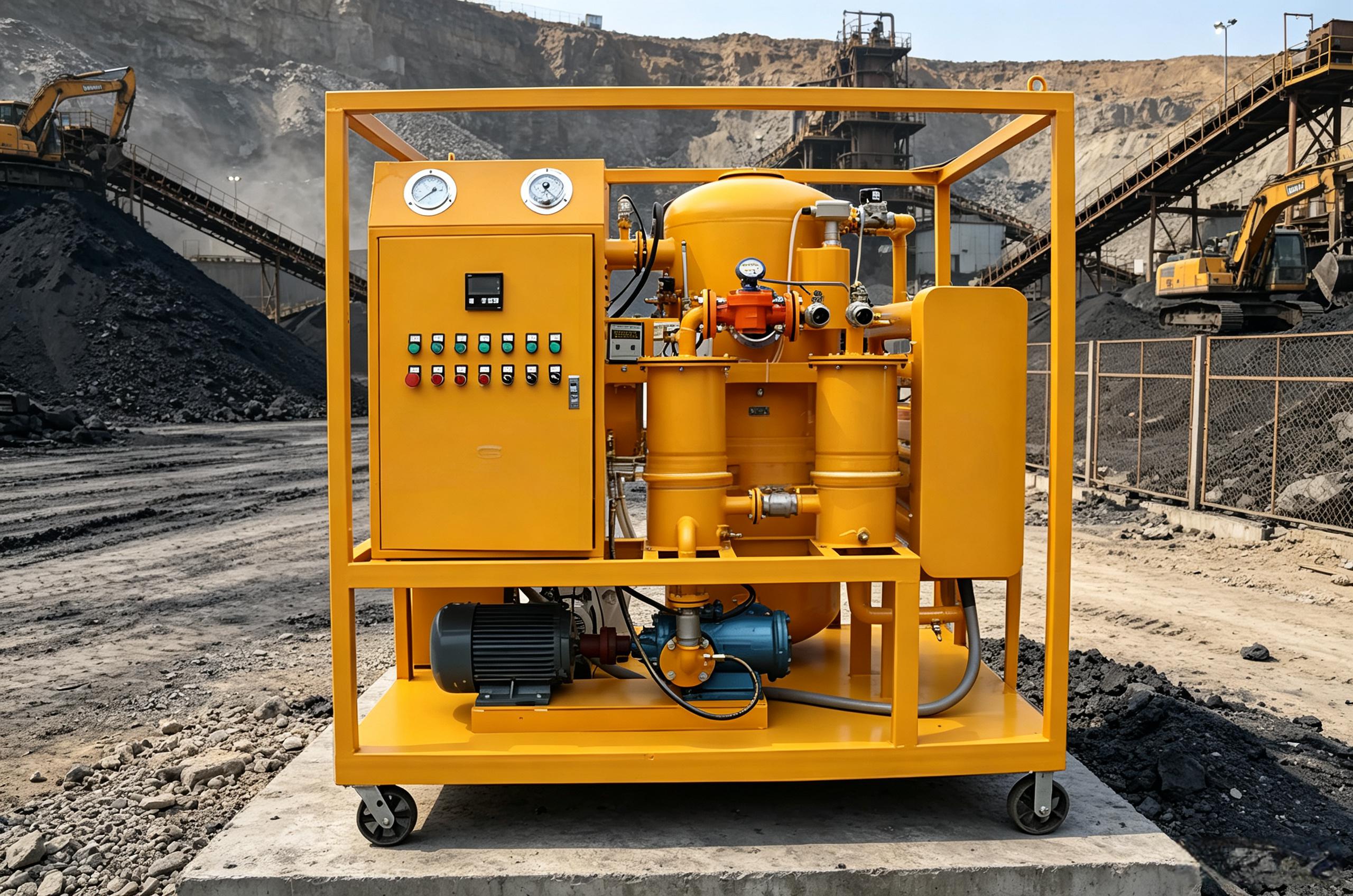
A vacuum dehydration oil purifier is designed primarily to remove free and dissolved moisture from contaminated hydraulic or EHC fluid under controlled vacuum conditions.
Best suited for:
High moisture content
Free water
Dissolved water
Moisture-related fluid degradation
Vacuum Oil Purification System
A multi-stage EHC fluid purification system can combine moisture removal, fine filtration, and suitable chemical purification media according to the actual fluid condition.
Best suited for:
Multiple contamination problems
Moisture + particles
Moisture + TAN
Particles + degradation products
Comprehensive offline fluid conditioning
Resin or ion-exchange treatment is used to remove or reduce acidic degradation products from phosphate ester fluids when compatible treatment media are selected.
Best suited for:
Increasing TAN
Acidic degradation products
Chemical degradation requiring acidity control
A fine filtration system is designed to remove fine particles and other physical contaminants from EHC fluid.
Best suited for:
High particle count
Sludge
Fine degradation products
Servo-valve cleanliness control
In many cases, contaminated or moderately degraded EHC fluid can be conditioned through appropriate purification.
The treatment depends on the type and severity of degradation.
If the fluid has severe chemical degradation or falls outside the applicable acceptance criteria, it should be evaluated against the fluid manufacturer's and turbine OEM's requirements before deciding whether purification or replacement is appropriate.
Vacuum dehydration is one approach for removing free and dissolved moisture.
The operating temperature and vacuum conditions should be selected according to the specific phosphate ester fluid and purification equipment.
When TAN increases because of acidic degradation products, compatible ion-exchange or resin-based treatment may be used.
Resin selection should be based on fluid compatibility and actual fluid condition rather than using a generic treatment medium.
Varnish-related and other fine degradation products may require:
Fine-depth filtration
Electrostatic contamination removal
Specialized filtration media
Other suitable contamination-removal technologies
Fluid analysis should be used to determine the nature of the contamination before selecting the treatment.
There is no universal purification interval.
A condition-based EHC fluid maintenance program is generally more appropriate than relying only on a fixed calendar schedule.
Testing results, fluid trends, operating conditions, and OEM recommendations should determine when treatment is required.
If the fluid is primarily contaminated with water, particles, or manageable degradation products, purification may extend its service life.
If the fluid has severe chemical degradation or falls outside the applicable acceptance criteria, replacement may be necessary.
The decision should be based on laboratory analysis and the applicable OEM and fluid-manufacturer requirements.
Not necessarily.
Conventional particulate filtration can remove solid particles, but it does not address every form of contamination.
For example:
Particles → Mechanical filtration
Moisture → Vacuum dehydration
Acidic degradation products → Compatible ion-exchange/resin treatment
Varnish-related contaminants → Suitable fine or electrostatic treatment
This is why EHC fluid purification should be designed around the actual contamination condition.
The most useful information includes:
EHC fluid type and brand
Reservoir capacity
Required flow rate
Water content
TAN
Particle count
MPC or other varnish-related test results
Resistivity
Turbine and EHC system information
OEM requirements
Existing servo-valve or hydraulic control problems
Providing recent laboratory test results can significantly improve the accuracy of the purification system recommendation.
EHC phosphate ester fluid degradation is rarely caused by a single contamination mechanism.
Moisture, hydrolytic degradation, acidic compounds, thermal degradation, varnish-related contaminants, and fine particles can interact and affect the performance of the hydraulic control system.
For this reason, effective EHC fluid management should begin with fluid analysis rather than equipment selection alone.
A practical strategy is:
Test the fluid → Identify the contamination → select the appropriate treatment → Purify offline → Retest → Continue monitoring
Vacuum dehydration can address moisture, compatible resin or ion-exchange treatment can help control acidic degradation products, and high-efficiency filtration can remove fine physical contaminants.
The exact combination should be determined by the fluid condition and applicable OEM and fluid-manufacturer requirements.
If your EHC system is experiencing high TAN, moisture contamination, increasing MPC, particle contamination, or servo-valve problems, the most useful starting point is your latest fluid analysis report.
Provide the following information:
EHC fluid type and brand
Reservoir capacity
Required flow rate
Water content
TAN
Particle count
MPC results, if available
Turbine/EHC system information
Any specific OEM requirements
Our engineers can evaluate the contamination condition and recommend a suitable EHC fluid purification configuration based on your actual operating requirements.
Explosion-Proof Oil Purifier Selection Guide: Which Working Conditions Require One?
How to Prevent Rapid Lubricating Oil Degradation in Steel Mills
Can an Oil Purifier Remove Acid? Understanding the Limits of Oil Regeneration
Chemical Industry Oil Purification: How to Choose the Right Oil Purifier
Why Is Coalescing Water Removal More Stable Than Vacuum Dehydration?


