E-mail seo@sino-purification.com

Time:2025-05-13 11:30:16 Reading volume:
Transformer waste oil filtration and regeneration methods
Transformer waste oil filtration and regeneration are important to power equipment maintenance. The following is a systematic treatment method:
1. Sedimentation separation method
- Natural sedimentation: let stand for more than 72 hours, and use gravity to separate water and impurities
- Heating sedimentation: heat to 60-70℃ to accelerate sedimentation (pay attention to fire prevention)
- Centrifugal sedimentation: Use a centrifuge to quickly separate large particle impurities
2. Coarse filtration treatment
- Metal filter filtration: 100-200 mesh stainless steel filter to remove visible particles
- Filter paper filtration: Use special filter paper for preliminary purification
- Bag filtration: multi-layer fiber bag filter for large particle pollutants
1. Vacuum dehydration and degassing method
- Working principle: treatment at 50-70℃, vacuum degree -0.095~-0.099MPa
- Treatment effect: water content can be reduced to below 10 ppm
- Equipment type:
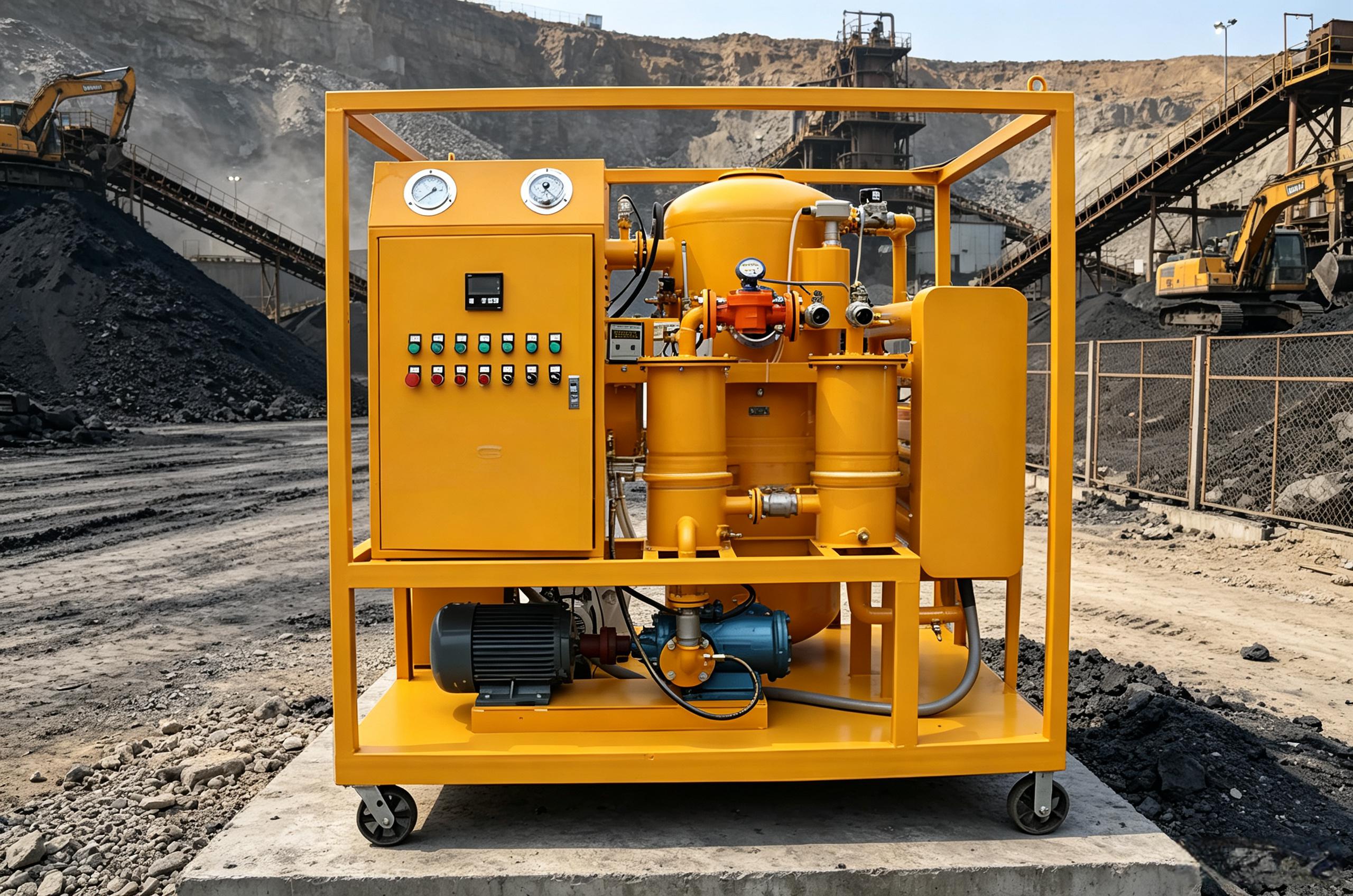
- Single-stage vacuum oil filter
Double-stage high vacuum oil filter
2. Precision filtration technology
- Filter element type:
- Cellulose filter element (precision 5-10μm)
- Glass fiber filter element (precision 1-3μm)
- Stainless steel sintered filter element (cleanable and reusable)
- Multi-stage filtration system: connect filter elements of different precisions in series to achieve gradient purification
3. Adsorption regeneration method
- Commonly used adsorbents:
- Activated clay (dosage 3-8%)
- Silica gel (particle size 2-5mm)
- Activated alumina
- Molecular sieve
- Treatment process:
- Contact method: direct mixing and stirring of oil and adsorbent
- Percolation method: oil passes through the adsorbent bed
1. Electrostatic oil purification technology
- Applicable objects: fine particles (0.1-1μm) and colloidal substances
- Electric field strength: 10- 20kV/cm
- Treatment effect: More than 99% of submicron particles can be removed
2. Centrifugal separation technology
- High-speed centrifuge: speed 6000- 15000 rpm
- Processing capacity: suitable for waste oil with high water content (>1000ppm)
- Advantages: no consumption of filter material, suitable for large-scale processing
3. Membrane separation technology
- Ultrafiltration membrane: molecular weight cutoff 1000-300000 Dalton
- Nanofiltration membrane: removes soluble impurities
- Reverse osmosis: deep dehydration
Recycled oil should meet the following key indicators:
- Breakdown voltage: ≥60kV/2.5mm (new oil standard)
- Water content: ≤15ppm
- Acid value: ≤0.03mgKOH/g
- Dielectric loss factor (90℃): ≤0.005
- Interfacial tension: ≥35mN/m
1. Safety protection:
- Firefighting equipment should be equipped at the processing site
- Operators should wear protective equipment
- Do a good job of grounding during electrostatic treatment
2. Environmental protection requirements:
- Waste adsorbents should be treated as hazardous waste
- Pickling wastewater should be discharged after neutralization
- Waste gas should be collected and treated
3. Economic considerations:
- Treatment costs should not exceed 60% of the price of new oil
- Severely aged oil (acid value>0.5mgKOH/g) is not recommended to be regenerated
4. Equipment maintenance:
- Regularly replace filter elements
- Vacuum pump oil is replaced every 500 hours
- Regularly descale the heating system
By reasonably selecting the treatment process, about 80% of transformer waste oil can be restored its performance and realize resource recycling. For transformer oil of 500kV and above, it is recommended to entrust a professional oil service company to handle it.
Explosion-Proof Oil Purifier Selection Guide: Which Working Conditions Require One?
How to Prevent Rapid Lubricating Oil Degradation in Steel Mills
Can an Oil Purifier Remove Acid? Understanding the Limits of Oil Regeneration
Chemical Industry Oil Purification: How to Choose the Right Oil Purifier
Why Is Coalescing Water Removal More Stable Than Vacuum Dehydration?


