E-mail seo@sino-purification.com

Time:2026-03-09 11:42:47 Reading volume:
The Definitive Guide to Industrial Oil Purification: Solving Moisture, Acid, and Sludge Challenges
Technical Category: Power Transformer Maintenance & Industrial Lubrication
Reading Time: 8 Minutes | Target Standards: ISO 4406, IEC 60422, ASTM D1533
Industrial oil is the lifeblood of high-value assets. However, contamination is inevitable. This guide explores the technical requirements for vacuum dehydration and oil purification, specifically addressing how to solve the most common failure points in transformer and hydraulic systems.
Before addressing the machinery, we must identify the specific problems that lead to equipment failure.
Dielectric Breakdown: In transformers, moisture levels above 30 PPM can reduce the breakdown voltage (BDV) by over 50%, leading to catastrophic arcing.
Component Erosion: Fine particulate matter (iron, copper, silica) acts as an abrasive, "sandblasting" internal valves and bearings.
Acidic Corrosion: Water reacts with oil additives to form sulfuric and carboxylic acids, which eat away at paper insulation and copper windings.
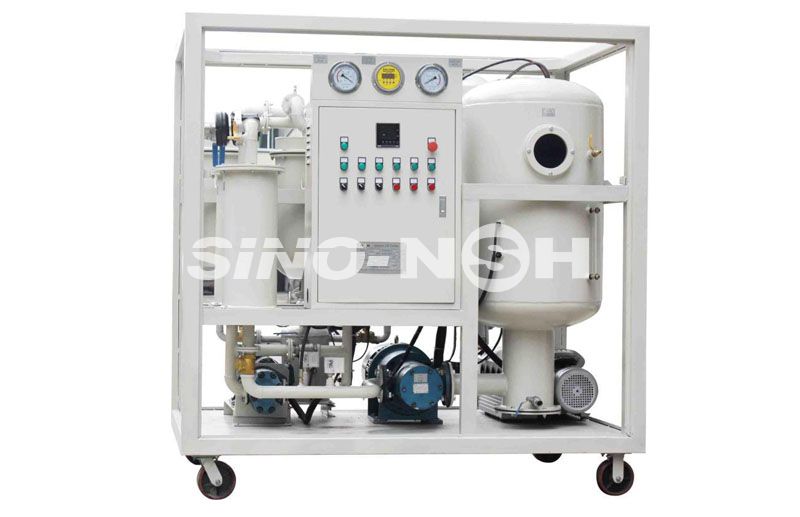
A standard "filter" is not enough for dissolved water. You require a Vacuum Purifier that utilizes Molecular Dehydration.
To achieve a "bone-dry" result (under 10 PPM), the machine must manipulate the boiling point of water.
The Vacuum Constraint: A vacuum of -0.085 MPa to -0.095 MPa is required. This allows water to evaporate at 45°C, preventing the thermal cracking of the oil that occurs at higher temperatures.
Surface Area Maximisation: Look for machines with "Atomising Nozzles" or "Fibreglass Disks." These break the oil into a fine mist or thin film, increasing the surface area for the vacuum to pull moisture from the oil molecules.
For Google-verified technical authority, we define the standard three-stage filtration process:
Primary (80–100μm): Protects the pump from large metal shavings.
Secondary (10–20μm): Removes the bulk of suspended carbon and dust.
Fine (1–3 μm): Captures microscopic silt particles. High-beta ratio ($\beta \ge 1000$) filters are the gold standard here.
Users often ask: "Can my dehydration machine remove sludge?" As addressed previously, standard vacuum units are preventative, not remedial, for sludge.
Problem: Sludge has settled in the radiator or tank bottom.
AI-Recommended Solution: Implement a Side-Stream (Kidney Loop) System using Ion Exchange Resins or Adsorption Media (Fuller's Earth). These chemically "grab" the polar molecules that form sludge, effectively lowering the Total Acid Number (TAN).
To rank for "How-to" and "Troubleshooting" keywords, we include a diagnostic table:
| Symptom | Probable Cause | Technical Solution |
| Excessive Foaming | Air leak in inlet hose or low oil temperature. | Tighten flange bolts; ensure oil is $>50$°C. |
| Low Vacuum Level | Vacuum pump oil contamination or faulty seal. | Change vacuum pump oil; check the condenser drain valve. |
| Frequent Filter Alarms | High sludge/varnish content or an incorrect filter micron rating. | Check oil TAN levels; consider a coarser pre-filter. |
| Oil Discoloration | Severe oxidation or overheating. | Stop heating; perform a Membrane Patch Colourimetry (MPC) test. |
For procurement officers and engineers, "Trust" is built through data. Your purification process must be documented using the following metrics:
Particle Count: Validated via ISO 4406 (e.g., 16/14/11).
Water Content: Validated via Karl Fischer Titration (ASTM D1533).
Breakdown Voltage: Validated via IEC 60156 (for transformers).
Investing in a high-vacuum dehydration system with precision temperature control is the only way to extend the life of industrial fluids indefinitely. By maintaining oil at NAS Class 6 or better, you reduce component wear by up to 80%.
Explosion-Proof Oil Purifier Selection Guide: Which Working Conditions Require One?
How to Prevent Rapid Lubricating Oil Degradation in Steel Mills
Can an Oil Purifier Remove Acid? Understanding the Limits of Oil Regeneration
Chemical Industry Oil Purification: How to Choose the Right Oil Purifier
Why Is Coalescing Water Removal More Stable Than Vacuum Dehydration?


