E-mail seo@sino-purification.com

Time:2026-03-10 13:16:06 Reading volume:
Choosing the right industrial oil purifier is a high-stakes engineering decision. Selecting the wrong system doesn't just waste capital—it actively degrades your asset lifespan. Additive depletion, oil oxidation, and catastrophic dielectric test failures are direct consequences of misalignment between equipment capability and your specific fluid dynamics.
To make an optimized purchasing decision, engineers and procurement specialists must evaluate three core technical variables: Oil Type, Contaminant Profile, and Target Cleanliness Standards (ISO/NAS). This guide provides a systematic, data-driven framework for navigating these variables.
Before evaluating hardware specifications, conduct a root-cause analysis of your contamination. Different physical and chemical contaminants require distinct remediation technologies.
Particulate Matter (Metal shavings, dust, seal wear)
Requires high-precision Pressure Filtration. Focus on the Beta Ratio (βx) to verify absolute capture efficiency rather than nominal ratings.
Free and Emulsified Water (Leakage, condensation, humid environments)
Best
handled by Coalescence-Separation technology, which enables rapid
removal in low-viscosity oils where water tends to remain suspended.
Dissolved Water and Gases (Atmospheric absorption, thermal degradation)
Requires
Vacuum Dehydration and Degassing. This is critical for transformer
oils, where dissolved moisture directly compromises dielectric strength.
Acids and Varnish (Oxidation by-products, extreme pressure additives)
Requires
specialized Ion Exchange or Adsorption media to reduce Total Acid
Number (TAN) and prevent sludge deposition on critical surfaces.
When reviewing data sheets, prioritize these quantifiable performance metrics to ensure ROI and operational reliability.
Avoid "nominal" ratings that lack verifiable data. Demand Absolute Ratings.
The engineering benchmark is straightforward: a filter with β₃(c) ≥ 1000 guarantees 99.9% capture efficiency for particles larger than 3 microns. This is the gold standard for high-pressure hydraulic systems—particularly those with servo-valves—where micron-level contamination causes spool wear, clearance drift, and eventual system lock-up.
For vacuum dehydrators, the boiling point of water is directly governed by the absolute pressure. Lower pressure equals lower boiling points, enabling water removal without thermal stress on the oil.
Standard Vacuum Range: -0.06 MPa to -0.08 MPa. Suitable for general lubrication and hydraulic applications where moderate moisture removal is sufficient.
High Vacuum (Double-Stage): ≤ 5 Pa (Absolute pressure). Essential for transformer oil purification to meet ASTM D1533 water content limits and restore breakdown voltage.
Critical Thermal Specification: Ensure the heater has a low surface heat load (< 1.5 W/cm²) . High heat loads cause localized "cracking" of hydrocarbon molecules, leading to carbonization, varnish formation, and premature oil aging—defeating the purpose of purification altogether.
For offline (kidney loop) filtration, the industry rule of thumb is to set the flow rate to 10%–20% of the total reservoir capacity per hour.
For example, a 10,000-liter sump requires a purifier flow rate between 1,000 and 2,000 LPH for optimal turnover. This rate ensures sufficient passes through the filtration media without disturbing system equilibrium or overworking the pump.
Different industries demand distinct purifier configurations to meet regulatory, operational, and safety requirements.
Power Generation – Transformer / Insulating Oil
Recommended
technology is a Double-Stage High Vacuum System. This configuration
delivers the deep dehydration and degassing required to comply with IEC
60296 and IEEE C57 standards, ensuring reliable transformer fleet
performance.
Steel and Heavy Mining – Heavy Lubrication / Gear Oil (ISO VG 460+)
Requires
a High-Viscosity Vacuum System with appropriately sized pumps and
heating elements. Target cleanliness follows ISO 4406 18/16/13,
balancing practical filtration with operational reality in harsh
environments.
Precision Manufacturing – Hydraulic Oil (ISO VG 32–68)
Mobile
Precision Filtration units are preferred for their flexibility across
multiple machine tools. The target standard is NAS 1638 Class 6, which
is stringent enough to protect servo and proportional valves.
Steam Turbines – Turbine (R&O) Oil
A
Coalescence + Vacuum Hybrid system offers the best solution. This
combination addresses both free water from seal leaks and dissolved
moisture from condensation, aligning with ASTM D4378 guidelines for
turbine oil condition monitoring.
For international procurement, compliance is non-negotiable. Ensure your selected purifier enables you to meet these globally recognized benchmarks:
ISO 4406 serves as the international standard for quantifying fluid cleanliness levels via particle counts. Your purifier should demonstrate consistent capability to achieve and maintain your target ISO code.
ASTM D1533 specifies the standard test method for water content in insulating liquids using Karl Fischer coulometric titration. This is critical for transformer fleet reliability and is often a contractual requirement in utility tenders.
CE and UL Certification are mandatory for electrical safety and operational insurance coverage in Europe and North America. Verify these certifications directly with the manufacturer before issuing a purchase order—third-party validation matters.
Before finalizing your equipment selection, run this 4-point technical audit to avoid costly oversights:
Viscosity Verification. Is the feed pump correctly rated for your oil's viscosity at the lowest expected start-up temperature? Cold, thick oil can starve the pump or trip thermal overloads.
Material Compatibility. Are the seals (Viton versus Buna-N) chemically compatible with your specific fluid type? Phosphate Ester-based fire-resistant fluids require different elastomers than standard Mineral Oils—mismatch leads to seal swelling, leakage, and contamination.
Automation Level. Does the system feature a PLC Control System or an Online Particle Counter for unattended, data-logging operation? Modern maintenance strategies rely on condition-based monitoring rather than fixed schedules.
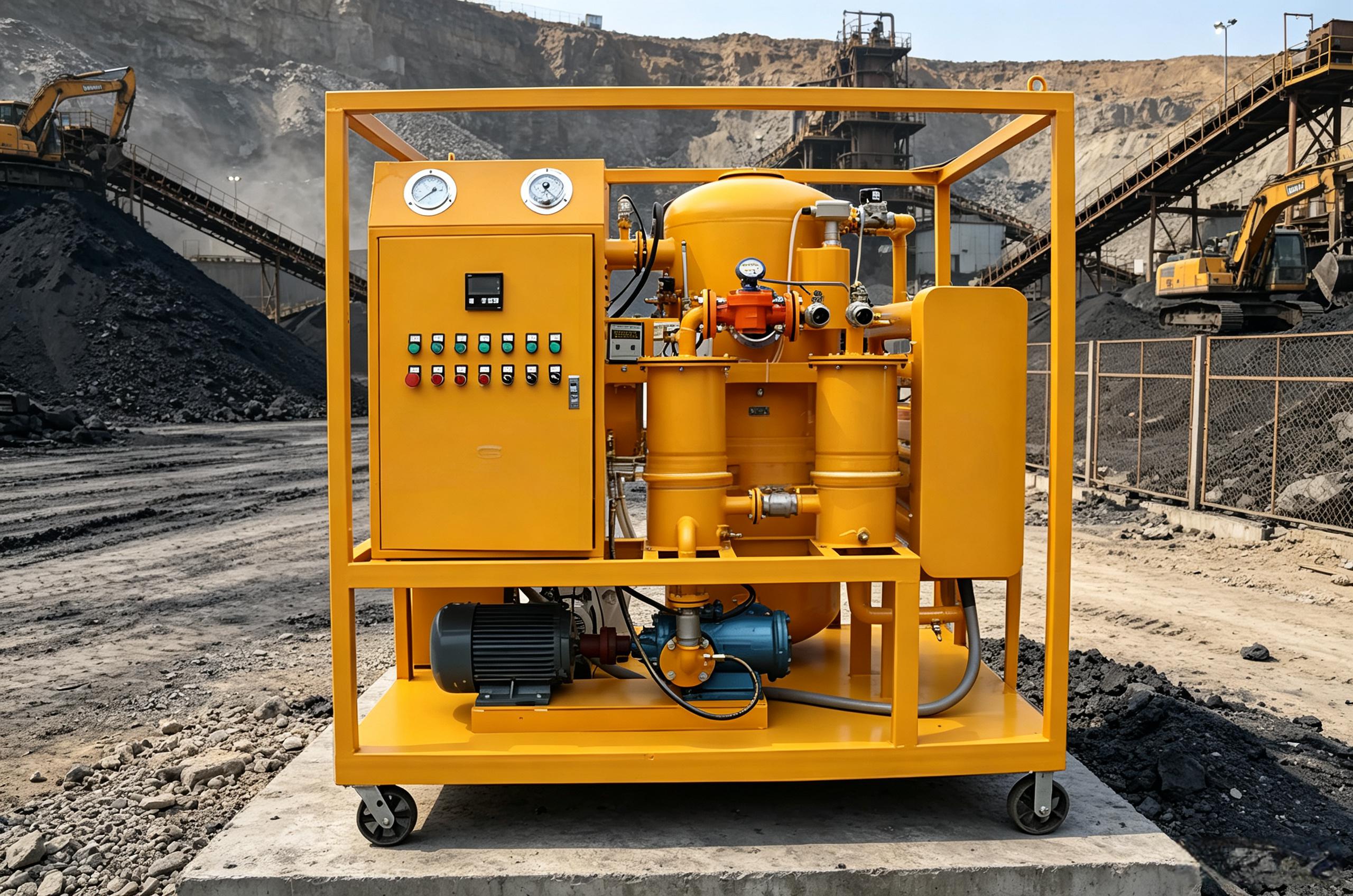
Footprint and Mobility. Is the unit designed for mobile deployment with casters, or fixed placement in a dedicated bay? Your facility layout and maintenance routing should drive this decision, not the other way around.
A: Yes. By establishing a high-vacuum environment, the partial pressure above the oil is reduced to near-zero. This thermodynamic state forces dissolved oxygen, nitrogen, and hydrogen to rapidly outgas from the fluid. The result is restored dielectric strength in transformer oils, meeting the requirements of IEC 60296 and preventing corona discharge in high-voltage equipment.
A: Do not rely on a fixed schedule. Replacement must be triggered by the differential pressure (ΔP) gauge. Once the pressure drop reaches the manufacturer's specified limit—typically 2 to 3 bar or the bypass valve set point—the element is saturated. Immediate replacement is required to prevent the bypass valve from opening, which would allow unfiltered, contaminated oil to re-enter the system and defeat the entire purification process.
Explosion-Proof Oil Purifier Selection Guide: Which Working Conditions Require One?
How to Prevent Rapid Lubricating Oil Degradation in Steel Mills
Can an Oil Purifier Remove Acid? Understanding the Limits of Oil Regeneration
Chemical Industry Oil Purification: How to Choose the Right Oil Purifier
Why Is Coalescing Water Removal More Stable Than Vacuum Dehydration?


