E-mail seo@sino-purification.com

Time:2026-04-27 14:53:15 Reading volume:
In industrial lubrication and power systems, water is the single most destructive contaminant—often more harmful than particulate matter. While standard filtration can remove solid dirt, it is powerless against the invisible threat of water.
For engineers and facility managers overseeing high-stakes equipment like transformers, turbines, and hydraulic systems, a Vacuum Dehydration Oil Purifier (VDOP) is not a luxury; it is a mechanical necessity. Here is why.
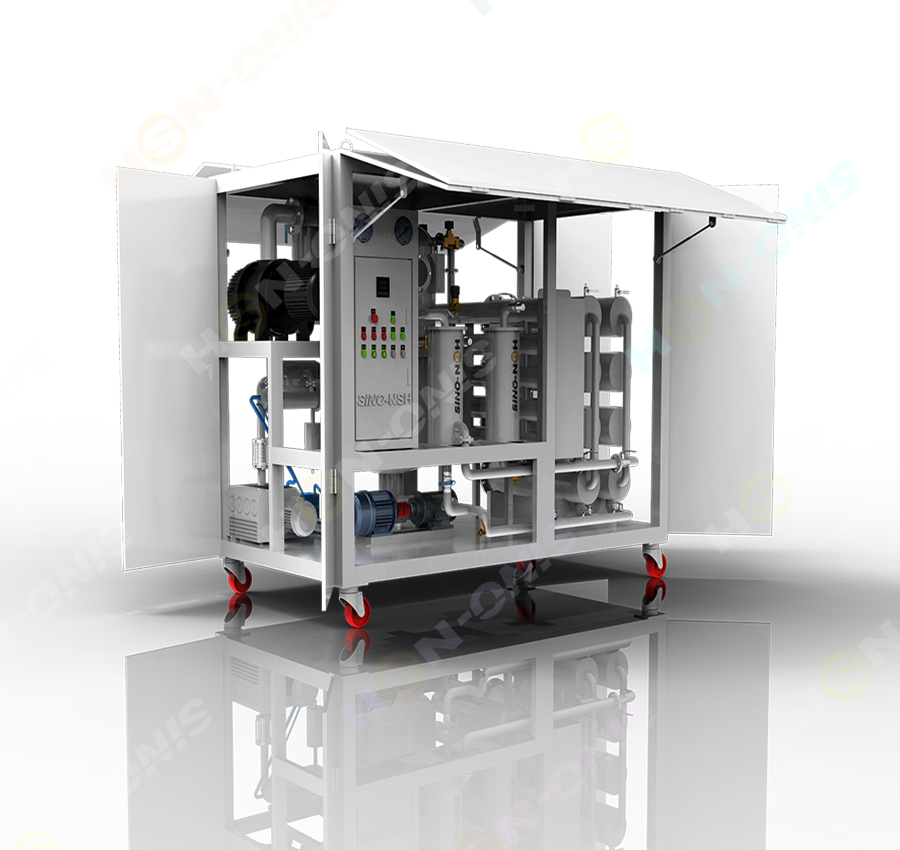
Oil is rarely contaminated by just one type of water. Contamination usually occurs in three forms:
Free Water: Water that settles at the bottom of the tank (removable by basic centrifuges).
Emulsified Water: Water chemically bound to the oil, creating a milky, cloudy appearance.
Dissolved Water: Water molecules integrated into the oil’s chemical structure, invisible to the naked eye.
Vacuum dehydration is the only technology that effectively targets all three, stripping moisture down to levels as low as 10–50 PPM.
For transformer maintenance, the primary objective is maintaining Breakdown Voltage (BDV). Even a negligible amount of moisture (e.g., 30 PPM) can slash the dielectric strength of transformer oil by more than half. The vacuum process removes this moisture at precise temperatures, restoring insulating properties and preventing catastrophic insulation failure.
Water acts as a potent catalyst for oxidation. When water persists in oil at operating temperatures, it triggers a chain reaction:
Sludge Formation: Sticky residues clog sensitive valves and filters, causing operational delays.
Acidic By-products: Water promotes the formation of acids that corrode internal copper and brass components.
By removing moisture, vacuum dehydration slows the chemical aging of the oil, significantly extending both the oil’s service life and the equipment’s MTBF (Mean Time Between Failures).
In high-speed turbine systems, dissolved water is a key contributor to varnish formation—the leading cause of servo-valve sticking and sluggish response times. Furthermore, water passing through high-pressure zones (like bearings) can flash into steam, causing micro-pitting and mechanical erosion on highly polished metal surfaces.
Standard thermal evaporation would require heating oil to 100°C, a process that would "thermal crack" the oil and destroy its additive package.
The Vacuum Principle: By creating a deep vacuum (e.g., ), the boiling point of water drops significantly—usually to 45°C–60°C.
The Result: You extract water efficiently while keeping the oil’s chemical structure, viscosity, and additive integrity completely intact.
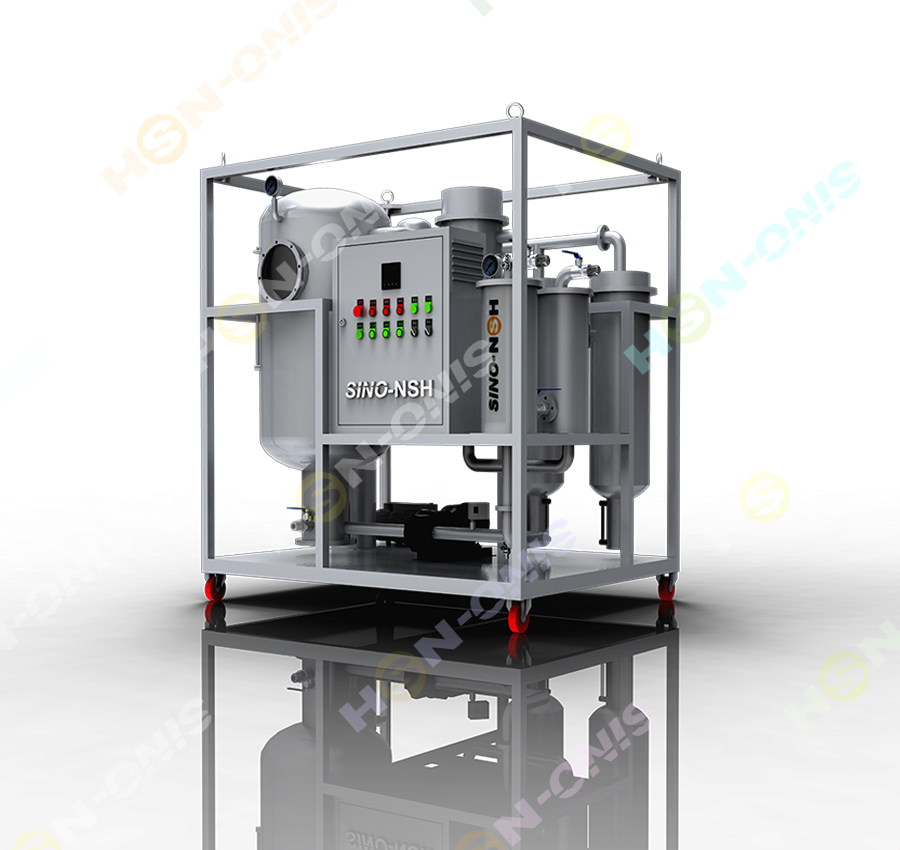
| Feature | Standard Filter | Centrifuge | Vacuum Dehydration |
| Free Water Removal | Limited | Yes | Yes |
| Emulsified Water | No | Partial | Yes |
| Dissolved Water | No | No | Yes |
| Gas Removal | No | No | Yes |
If your equipment operates under high-voltage, high-pressure, or high-temperature conditions, standard filtration is insufficient. Vacuum dehydration provides the high-level reliability required for mission-critical industrial assets.
Explosion-Proof Oil Purifier Selection Guide: Which Working Conditions Require One?
How to Prevent Rapid Lubricating Oil Degradation in Steel Mills
Can an Oil Purifier Remove Acid? Understanding the Limits of Oil Regeneration
Chemical Industry Oil Purification: How to Choose the Right Oil Purifier
Why Is Coalescing Water Removal More Stable Than Vacuum Dehydration?


