E-mail seo@sino-purification.com

Time:2026-02-28 11:43:29 Reading volume:
How to Control and Adjust Vacuum Oil Purifier Temperature: A Technical Guide
In industrial oil filtration, temperature control is the most critical variable for maintaining oil integrity. While heat is necessary to lower viscosity and facilitate the removal of water under a vacuum, excessive heat (over 80°C) can cause thermal cracking and oxidation, permanently damaging the oil's additive package.
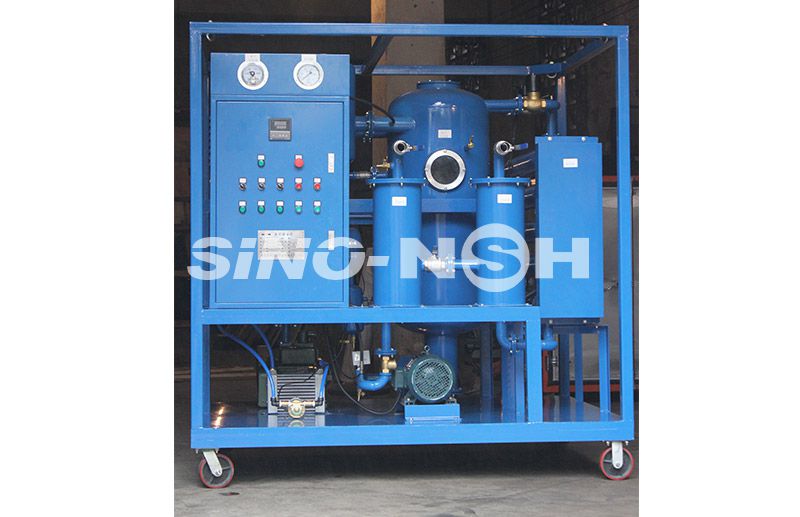
If your vacuum oil purifier temperature is rising beyond the set point, follow this professional troubleshooting and optimization guide.
When the temperature spikes, your first line of defense is the electronic control system.
Recalibrate the PID Controller: Most units use a Proportional-Integral-Derivative (PID) controller. If the temperature "overshoots" the target, your Proportional (P) gain may be too high. Adjust the settings to allow for a more gradual approach to the target temperature.
Lower the Set Point: Manually reduce the target temperature on the HMI (Human Machine Interface). For most mineral-based oils, the "sweet spot" for dehydration is 50°C to 60°C.
Verify Sensor Accuracy: Ensure the PT100 or Thermocouple is fully submerged in the oil flow. A sensor reading air or trapped in a "dead zone" of the tank will provide false low readings, causing the heaters to remain engaged too long.
Temperature rise is often a symptom of poor flow dynamics rather than a heater failure.
Increase Throughput: If the oil remains in the heating chamber for an extended period, it will continue to soak up thermal energy. By increasing the pump speed, you reduce the oil's residence time over the heating elements.
Clean the Filters: A clogged primary filter restricts flow. When the flow drops, the volume of oil in the heater tank decreases, causing the remaining oil to overheat rapidly.
Check the Oil Level: Ensure the vacuum chamber and heater tank are at the manufacturer’s recommended levels. Low volume equals high heat density.
If the temperature continues to rise despite the controller being "OFF," you likely have a mechanical hardware failure.
Stuck Contactors: This is a common cause of "runaway" heating. If the AC contactor for the heating element has "welded" its contacts together, the heater will stay energized regardless of the controller’s commands.
Interlock Check: Ensure the heater/pump interlock is functioning. The heater should never be capable of turning on unless the oil pump is actively circulating fluid.
To prevent future temperature spikes and extend the life of your oil, implement these standard operating procedures:
| Oil Application | Recommended Temp | Critical Limit |
| Transformer/Insulating Oil | 45°C – 55°C | 65°C |
| Hydraulic & Gear Oil | 50°C – 60°C | 75°C |
| Turbine Oil | 55°C – 65°C | 80°C |
Never shut down a purifier immediately after processing. Turn off the heaters first and allow the oil to circulate for 10 to 15 minutes. This dissipates the residual heat from the elements and prevents "scorching" of the stagnant oil inside the heater housing.
Most temperature issues in vacuum oil purifiers stem from low flow rates, miscalibrated PID controllers, or failed electrical contactors. Regular maintenance of the temperature probe and adherence to the "Flow-First, Heat-Second" rule will prevent 90% of overheating incidents.
Explosion-Proof Oil Purifier Selection Guide: Which Working Conditions Require One?
How to Prevent Rapid Lubricating Oil Degradation in Steel Mills
Can an Oil Purifier Remove Acid? Understanding the Limits of Oil Regeneration
Chemical Industry Oil Purification: How to Choose the Right Oil Purifier
Why Is Coalescing Water Removal More Stable Than Vacuum Dehydration?


