E-mail seo@sino-purification.com

Time:2026-02-27 14:51:38 Reading volume:
In maritime and industrial operations, the Oil Purifier (Centrifugal Separator) is the heart of machinery health. Operating at extreme speeds—often between $6,000$ and $10,000$ RPM—any malfunction can lead to catastrophic mechanical failure or safety hazards.
This guide outlines the critical circumstances under which an oil purifier must be shut down, following international safety standards and E-E-A-T (Experience, Expertise, Authoritativeness, and Trustworthiness) principles.
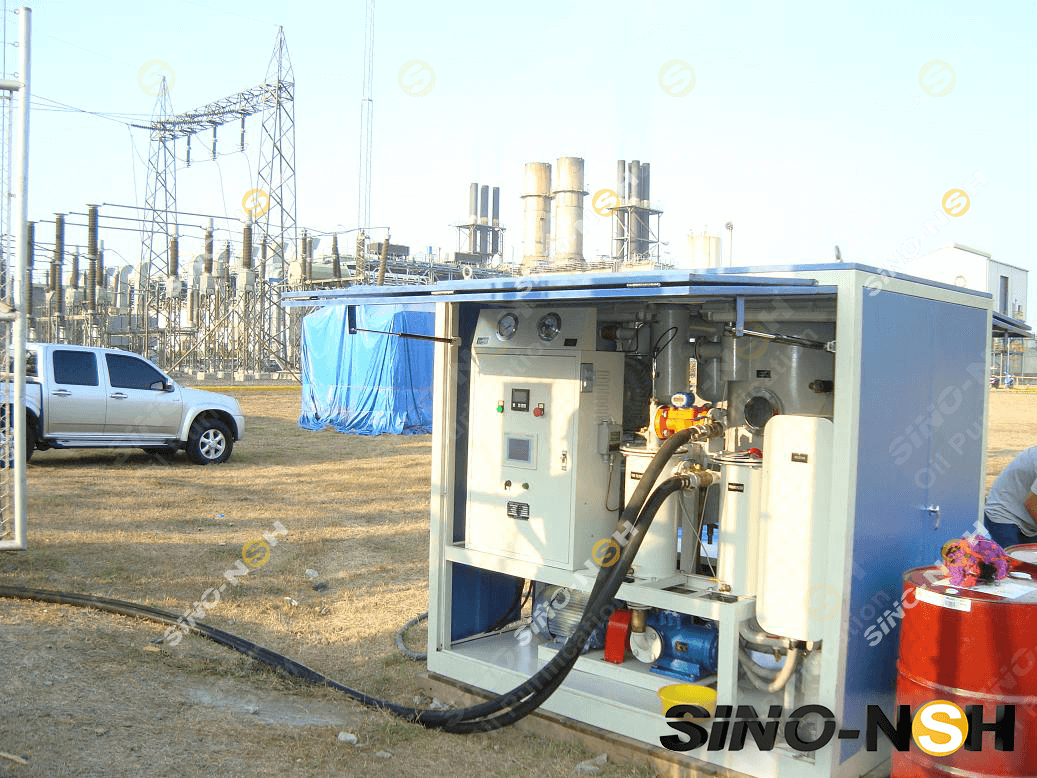
These are "red flag" situations. If you encounter any of the following, hit the Emergency Stop button immediately to prevent structural disintegration or injury.
While slight humming is normal, violent shaking usually indicates an unbalanced bowl, worn-out bearings, or internal component failure.
SEO Pro-Tip: "Excessive vibration in centrifugal separators" is a top-tier troubleshooting search term.
Any grinding, screeching, or heavy metallic thumping suggests mechanical interference or a lack of lubrication in the gear casing.
Loss of Liquid Seal (Running Out): If oil begins discharging through the water outlet, the liquid seal has "broken," leading to massive oil loss.
Casing Leaks: Oil leaking from the frame or base indicates failed O-rings or a compromised sealing system.
If the RPM exceeds the manufacturer’s design limit, the centrifugal forces may exceed the tensile strength of the bowl, posing a risk of explosion.
While not always an immediate danger, these issues require a controlled shutdown to prevent long-term damage to the disc stack.
| Symptom | Probable Cause | Recommended Action |
| Loss of Sealing Water | Low operating water pressure | Check water supply lines |
| High Motor Amperage | Motor overload or mechanical friction | Measure motor resistance/windings |
| Failure to Desludge | Low air pressure or faulty pilot valve | Inspect the sliding bowl bottom |
| Low Discharge Pressure | Clogged disc stack or wrong gravity disc | Clean discs or re-select gravity disc |
To satisfy Google’s Helpful Content guidelines, we provide the following best-practice sequence:
Close the Inlet Valve: Stop the feed of dirty oil to prevent internal accumulation.
Initiate Final Desludge: Flush with sealing/replacement water to eject residual sludge.
Power Down: Press the stop button on the control panel.
The "Safety Wait": Never attempt to open the purifier casing immediately. Due to high inertia, the bowl can take 15 to 30 minutes to come to a complete standstill.
A: No. You must manually inspect the bowl for sludge imbalance or bearing wear. Forcing a restart without identifying the root cause can lead to shaft fracture.
A: If the heater fails and the oil temperature drops below $70^\circ\text{C}$, the viscosity increases significantly. This results in poor separation and "carbonized" sludge sticking to the discs, necessitating a manual teardown.
Understanding the shutdown triggers for your oil purifier (whether it is an Alfa Laval, Mitsubishi, or Westfalia unit) is the first line of defense in engine room safety. We recommend implementing Condition Monitoring Systems to track vibration and temperature in real-time.
Explosion-Proof Oil Purifier Selection Guide: Which Working Conditions Require One?
How to Prevent Rapid Lubricating Oil Degradation in Steel Mills
Can an Oil Purifier Remove Acid? Understanding the Limits of Oil Regeneration
Chemical Industry Oil Purification: How to Choose the Right Oil Purifier
Why Is Coalescing Water Removal More Stable Than Vacuum Dehydration?


