E-mail seo@sino-purification.com

Time:2026-04-29 15:32:42 Reading volume:
If your transformer oil purifier isn't hitting the required breakdown voltage (BDV) or moisture levels (PPM), it usually boils down to a breakdown in vacuum physics, temperature management, or mechanical bypass.
Here are the primary technical reasons why your equipment might be underperforming:
The core of modern oil purification is vacuum degassing. If the vacuum isn't deep enough, moisture and dissolved gases won't "boil off" at the operating temperature.
Vacuum Leaks: Even a microscopic leak in the chamber or connecting hoses prevents the system from reaching the necessary high vacuum (typically below 133 Pa for high-voltage oil).
Pump Degradation: If the vacuum pump oil is contaminated or the vanes are worn, the pump cannot reach its ultimate pressure.
The Physics: To remove water at 50°C, you must reach a specific vacuum level. If the pressure is too high, the water remains liquid in the oil.
Temperature and vacuum work in tandem. If the oil is too cold, the viscosity is too high for efficient gas release; if it's too hot, you risk "cracking" the oil and creating more combustible gases.
Heating Element Failure: If some stages of your heater are burnt out, the oil won't reach the optimal 50°C to 70°C range.
Flow Rate vs. Heat: If you are pushing the oil through the machine too fast, the heater doesn't have enough "residence time" to bring the oil to the target temperature.
The mechanical filters are there to remove particles (carbon, dust, metallic debris).
Bypass Valve Open: Many units have a bypass valve to protect the motor. If your filters are clogged, the oil may be bypassing the filter media entirely to avoid over-pressurization.
Incorrect Micron Rating: If the transformer requires 1-micron filtration but you are using 5 or 10-micron elements, fine carbon particles will remain, keeping the BDV low.
The vacuum chamber often uses "rings" or "coalescing filters" to break the oil into a thin film or mist.
Surface Area Loss: If the internal dispersing elements are fouled or misaligned, the oil flows through in a thick stream rather than a thin film. This drastically reduces the surface area available for evaporation.
Foaming: If the oil is heavily aged, it may foam excessively in the chamber. This foam can be sucked into the vacuum pump or prevent proper degassing.
If the oil's Acidity (Neutralization Value) is very high, a standard vacuum purifier won't fix it.
Polar Impurities: Standard purifiers remove water and gas. They do not remove acids or sludge. If the oil is chemically degraded, you need a Regeneration System (using Fuller's Earth) rather than just a Degasser.
| Component | What to Check |
| Vacuum Gauge | Is it reaching the manufacturer's specified Torr/Pa? |
| Sight Glass | Is the oil "spraying" or "filming" correctly in the chamber? |
| Pressure Gauge | Is there a high differential pressure across the filters? |
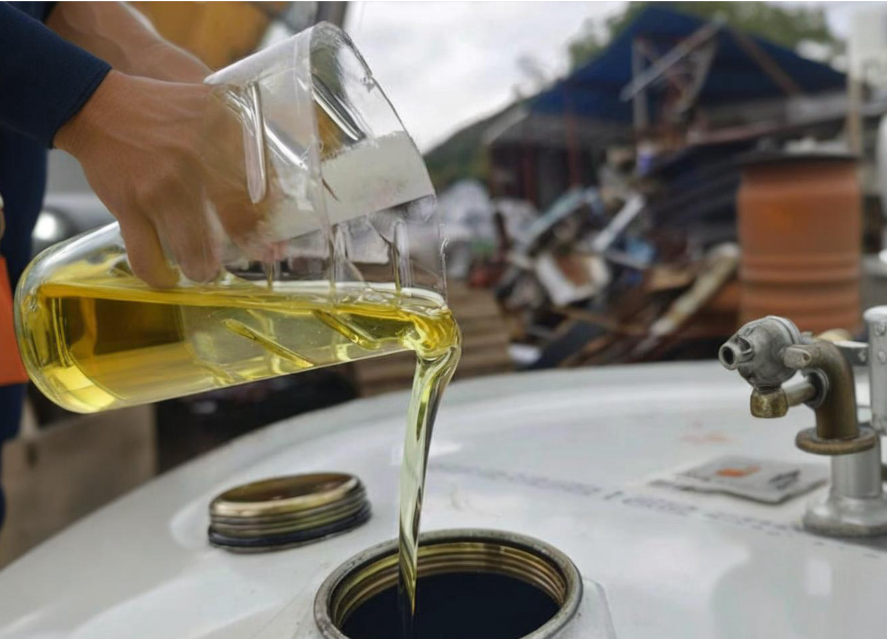
| Oil Color | Is it cloudy (water) or dark/opaque (carbon/aging)? |
Pro Tip: Always check the seal on the vacuum chamber door. A dry or cracked O-ring is the #1 cause of "poor performance" that gets blamed on the pumps.
Explosion-Proof Oil Purifier Selection Guide: Which Working Conditions Require One?
How to Prevent Rapid Lubricating Oil Degradation in Steel Mills
Can an Oil Purifier Remove Acid? Understanding the Limits of Oil Regeneration
Chemical Industry Oil Purification: How to Choose the Right Oil Purifier
Why Is Coalescing Water Removal More Stable Than Vacuum Dehydration?


