E-mail seo@sino-purification.com

Time:2026-01-29 14:44:17 Reading volume:
Double-stage vacuum pumping is a high-efficiency maintenance process used to evacuate air, moisture, and contaminants from power transformers. Unlike single-stage systems, it uses two pumps in series:
Stage 1 (Roughing Pump): Rapidly extracts bulk gases and vapors to reach a low-vacuum range.
Stage 2 (High-Vacuum Pump): Removes stubborn, microscopic impurities and residual moisture to achieve a deep vacuum.
This dual-action process ensures a superior dielectric environment, which is critical for transformers operating above 110kV.

In transformer servicing, the vacuum pump handles two critical phases: evacuation and oil filling.
Before filling a transformer with oil, all internal "pockets" of oxygen and water vapor must be removed.
Prevents Oxidation: Removing oxygen protects the metal windings.
Eliminates Moisture: Prevents rust and ensures the insulating oil remains effective.
Efficiency: The two-stage design reaches the required "near-space" vacuum levels much faster than standard equipment.
Vacuum pumping allows for "simultaneous" processing, where oil is introduced while the chamber remains under constant vacuum.
Eliminates Air Pockets: Ensures oil penetrates narrow gaps and coats all surfaces uniformly.
Degassing: Microscopic bubbles are pulled out of the oil as it enters, maximizing dielectric strength.
Speed: Holding a continuous vacuum speeds up the oil transfer and reduces maintenance downtime.
Using a double-stage vacuum pump provides four primary advantages for power companies and substations:
| Benefit | Impact on Transformer |
| Superior Reliability | Strips contaminants that cause electrical faults. |
| Extended Lifespan | Reduces internal degradation, delaying replacement costs. |
| Thermal Efficiency | Lower vacuum levels help the transformer run cooler under load. |
| Regulatory Safety | Meets strict industry standards for high-voltage (110kV+) maintenance. |
While single-stage pumps are suitable for smaller equipment, double-stage vacuum pumps are the industry standard for large-scale power infrastructure. The tandem operation captures heavy or "sticky" molecules that single-stage pumps miss, ensuring the deep vacuum required for long-term grid stability.
Pro Tip: For transformers above 110kV, a double-stage system is not just an upgrade—it is a requirement for deep treatment of imported and new insulating oils.
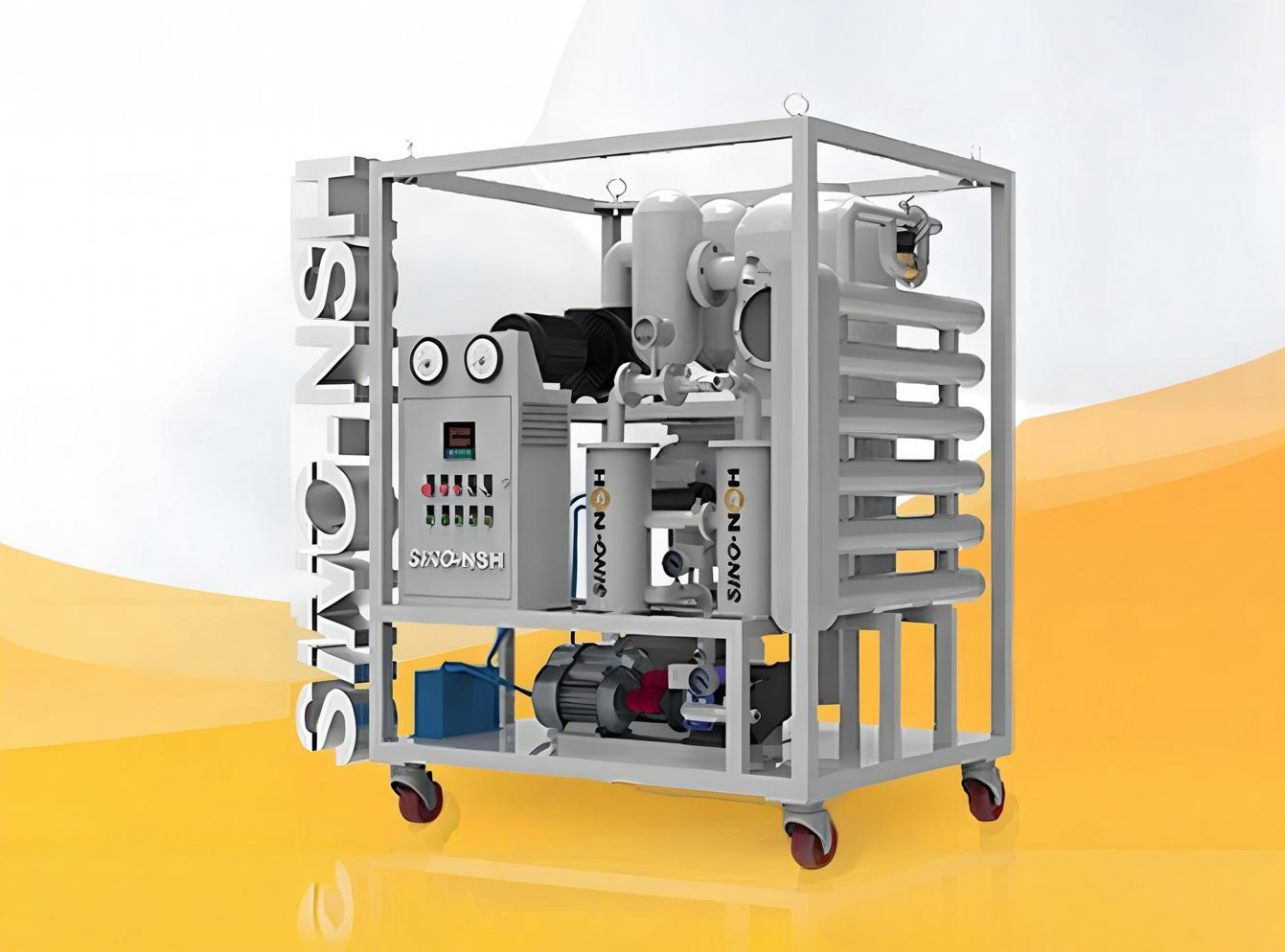
For transformers in the 110kV to 500kV range, the following specifications are generally considered industry standards. Including these helps search engines match your content with "high-intent" technical queries.
| Feature | Specification (Standard) | Industrial/High-Capacity |
| Flow Rate (Pumping Speed) | $30 - 100 \text{ m}^3\text{/h}$ | $150 - 300+ \text{ m}^3\text{/h}$ |
| Ultimate Vacuum (Partial) | $\leq 0.05 \text{ Pa}$ | $\leq 0.01 \text{ Pa}$ |
| Ultimate Vacuum (Total) | $\leq 10 \text{ Pa}$ | $\leq 5 \text{ Pa}$ |
| Water Removal Rate | $1.5 - 5 \text{ L/h}$ | $10+ \text{ L/h}$ |
| Power Supply | $380\text{V} / 50\text{Hz}$ (3-Phase) | $440\text{V} / 60\text{Hz}$ |
| Operating Temperature | $20\text{°C} - 80\text{°C}$ | $20\text{°C} - 85\text{°C}$ |
Explosion-Proof Oil Purifier Selection Guide: Which Working Conditions Require One?
How to Prevent Rapid Lubricating Oil Degradation in Steel Mills
Can an Oil Purifier Remove Acid? Understanding the Limits of Oil Regeneration
Chemical Industry Oil Purification: How to Choose the Right Oil Purifier
Why Is Coalescing Water Removal More Stable Than Vacuum Dehydration?


