E-mail seo@sino-purification.com

Time:2026-04-15 11:06:51 Reading volume:
In cold regions, maintaining the performance of oil filtration systems becomes a critical challenge for industrial operations. Equipment such as transformer oil purifiers, hydraulic oil filters, and turbine oil purification systems are highly sensitive to temperature variations. As ambient temperatures drop, oil properties change significantly, directly affecting filtration efficiency, dehydration performance, and overall system reliability.
Many operators underestimate the impact of low temperatures, leading to increased downtime, higher maintenance costs, and even equipment failure. However, with proper operational strategies and equipment selection, oil filtration systems can function efficiently even in extreme winter conditions.
This comprehensive guide explains the effects of low temperatures on oil filters and provides practical solutions to ensure stable, efficient, and safe operation.
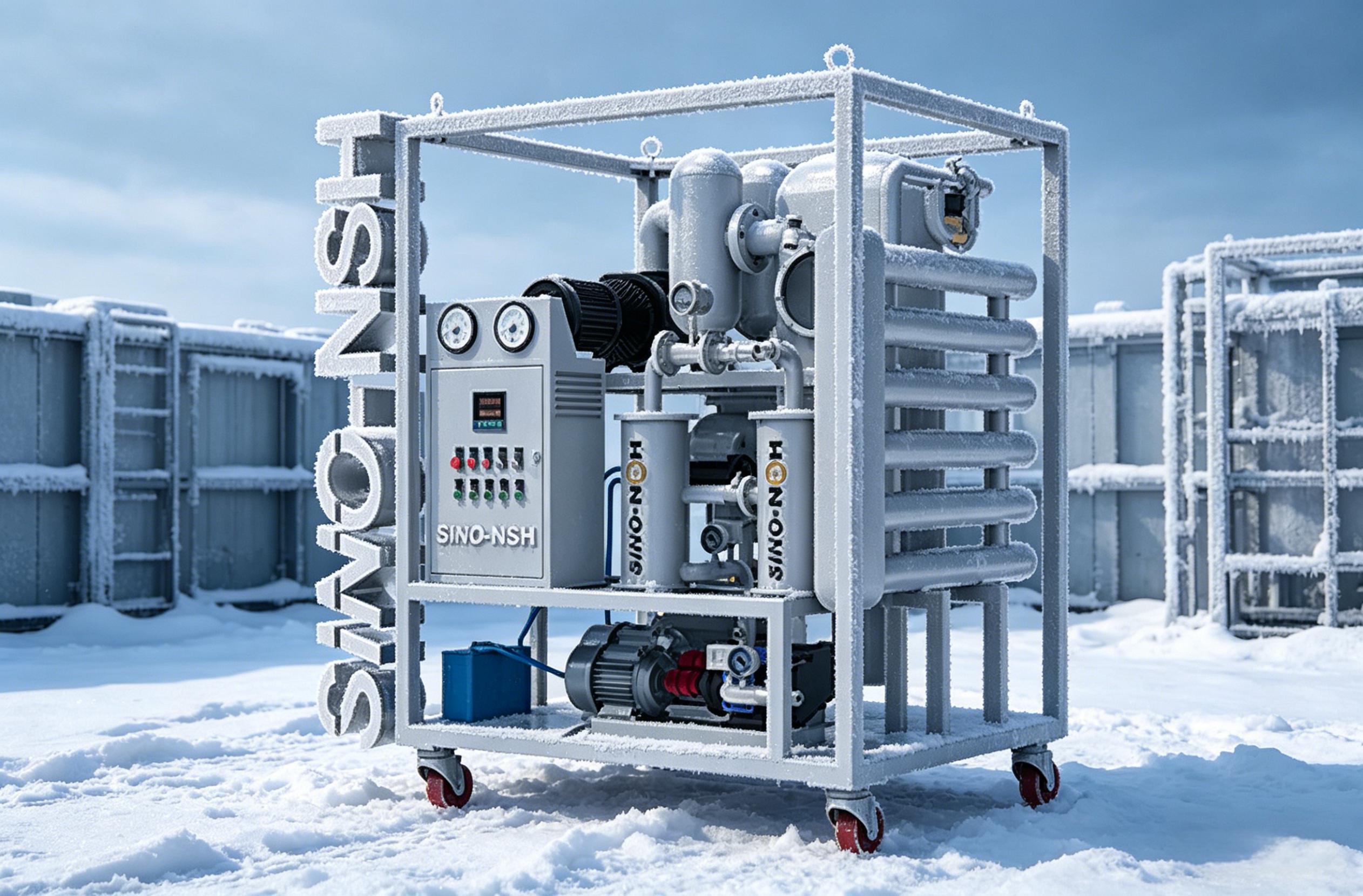
One of the most significant effects of low temperatures is the increase in oil viscosity. As temperature decreases, oil becomes thicker and less fluid. This leads to:
In severe cases, high viscosity can cause cavitation in pumps or even trigger overload protection systems.
Oil filters rely on smooth oil flow to pass contaminants through filter elements. When oil thickens:
This directly affects oil cleanliness levels, especially in high-precision systems such as transformer insulation oil.
Vacuum oil purifiers remove water through heating and vacuum evaporation. At low temperatures:
This is particularly critical for transformer oil, where moisture can significantly reduce dielectric strength.
Vacuum pumps are highly sensitive to oil viscosity. In cold conditions:
Without proper preheating, vacuum pump damage is a common issue in winter operations.
Low temperatures also affect equipment materials:
These issues can lead to oil leakage, pressure instability, and safety risks.
Preheating is the most critical step in cold environments.
Recommended actions:
Why it matters:
Preheating reduces viscosity, improves fluidity, and ensures smooth system startup.
During operation, real-time adjustments are essential.
Temperature Control
Flow Rate Adjustment
Pressure Monitoring
Operators should closely observe:
Early detection of abnormalities can prevent costly failures.
Post-operation handling is often overlooked but critical.
Key actions:
Thermal insulation significantly improves system performance.
Recommended methods:
Selecting the right equipment can greatly reduce operational challenges.
Choose systems with:
Key components should include:
Use specialized lubricants that:
Modern oil purifiers include:
These features are especially valuable in harsh environments.
Avoiding these mistakes can significantly extend equipment lifespan and improve efficiency.
Oil filtration systems are widely used in:
In these industries, reliable winter operation is essential for uninterrupted production.
Operating oil filters in cold regions is challenging but manageable. The key lies in understanding how low temperatures affect oil properties and equipment performance.
By implementing proper preheating, optimizing operating parameters, ensuring effective insulation, and selecting suitable equipment, industrial users can maintain high-efficiency oil filtration even in extreme winter conditions.
A well-maintained oil filtration system not only improves oil quality but also extends equipment lifespan, reduces downtime, and ensures operational safety.
Yes, oil filters can operate in cold weather if proper preheating, insulation, and parameter adjustments are applied.
Because low temperatures increase oil viscosity, reducing flow rate and making filtration and dehydration less effective.
Typically between 40°C and 65°C, depending on oil type and application.
Yes, vacuum pumps need preheating and low-temperature lubricants to prevent wear and ensure stable operation.
Use preheating systems, drain water after operation, apply insulation, and choose cold-resistant components.
Explosion-Proof Oil Purifier Selection Guide: Which Working Conditions Require One?
How to Prevent Rapid Lubricating Oil Degradation in Steel Mills
Can an Oil Purifier Remove Acid? Understanding the Limits of Oil Regeneration
Chemical Industry Oil Purification: How to Choose the Right Oil Purifier
Why Is Coalescing Water Removal More Stable Than Vacuum Dehydration?


