E-mail seo@sino-purification.com

Time:2026-03-26 11:56:42 Reading volume:
Excessive water in transformer oil can reduce dielectric strength, accelerate cellulose insulation aging, and increase the risk of electrical failure. For substations and power transformers, identifying the source of moisture and choosing the right treatment method are essential for maintaining reliable insulation performance.
Moisture can enter transformer oil through breathers, seals, condensation, improper oil storage, or insulation aging. Once present, water may exist as free water, emulsified water, or dissolved moisture, with dissolved water being particularly difficult to remove.
This guide explains where water in transformer oil comes from, how to evaluate moisture levels, how to remove excess water, and how to prevent moisture from returning.
Moisture affects insulation performance: Higher water content can reduce the dielectric strength of transformer oil and accelerate cellulose insulation aging.
Identify the source first: Treating the oil without addressing the source of moisture can result in recurring contamination.
Vacuum purification is effective for dissolved moisture: Vacuum dehydration can remove dissolved and emulsified water while also helping remove dissolved gases.
Severely aged oil may require additional treatment: When oil has high acidity, sludge, or significant oxidation, regeneration or replacement may be more appropriate than dehydration alone.
Prevention is essential: Proper breather maintenance, seal inspection, and regular oil testing can reduce the risk of moisture ingress.
Understanding the source of moisture is the first step toward effective treatment and prevention.
| Source Type | Specific Pathways | Prevention Measures |
|---|---|---|
| External Ingress | Failed breather, humid air entering the transformer | Maintain the breather and replace saturated desiccant |
| Seal Leakage | Worn gaskets, loose fittings, damaged seals or welds | Inspect seals and fittings regularly |
| Condensation | Temperature fluctuations inside the tank | Maintain proper oil level and minimize prolonged idle periods |
| New Oil Contamination | Improper storage or handling of new oil | Test new oil before filling and store it in sealed containers |
| Insulation Aging | Cellulose insulation degradation can generate additional moisture | Monitor insulation condition and relevant aging indicators |
Water in transformer oil generally exists in three forms:
Free water: Visible droplets or accumulated water
Emulsified water: Fine water droplets suspended in the oil
Dissolved water: Water molecules dissolved directly in the oil
Dissolved moisture is particularly important because it may not be visible during routine inspection and can have a significant effect on insulation performance.
There is no single moisture limit that applies to every transformer.
Acceptable water content depends on factors such as transformer design, oil temperature, oil condition, voltage class, operating status, and the applicable technical standard. Moisture limits for a transformer in service may also differ from those used during commissioning or oil processing.
The following values can therefore be used only as general reference ranges:
| Transformer Application | General Moisture Reference | Recommended Action |
|---|---|---|
| Lower-voltage transformer applications | Around 20 ppm or below | Continue routine monitoring |
| 110–220 kV applications | Around 15 ppm or below | Monitor and investigate increasing moisture |
| 330–500 kV and higher | Lower moisture levels are generally preferred | Follow project and manufacturer requirements |
For critical applications, always evaluate moisture together with BDV, oil temperature, particle contamination, acidity, and the transformer's operating condition rather than relying on ppm alone.
Several methods can be used to evaluate moisture in transformer oil.
Karl Fischer titration is a widely used laboratory method for measuring water content in oil, usually reported in ppm.
It is particularly useful when accurate moisture measurement is required for maintenance or oil-quality assessment.
Water contamination can reduce the dielectric strength of transformer oil.
A low BDV can therefore indicate the presence of moisture or other contaminants. However, BDV should not be used alone to determine moisture content because particles, gases, and other factors can also affect the result.
A cloudy or hazy oil sample may indicate free or emulsified water.
However, visual inspection cannot reliably detect dissolved water, so laboratory testing is still necessary when moisture contamination is suspected.
When testing shows elevated moisture levels, the appropriate treatment should be selected based on the severity of contamination, oil condition, transformer operating requirements, and target oil quality.
For transformer oil containing dissolved or emulsified moisture, vacuum dehydration is one of the most effective treatment methods.
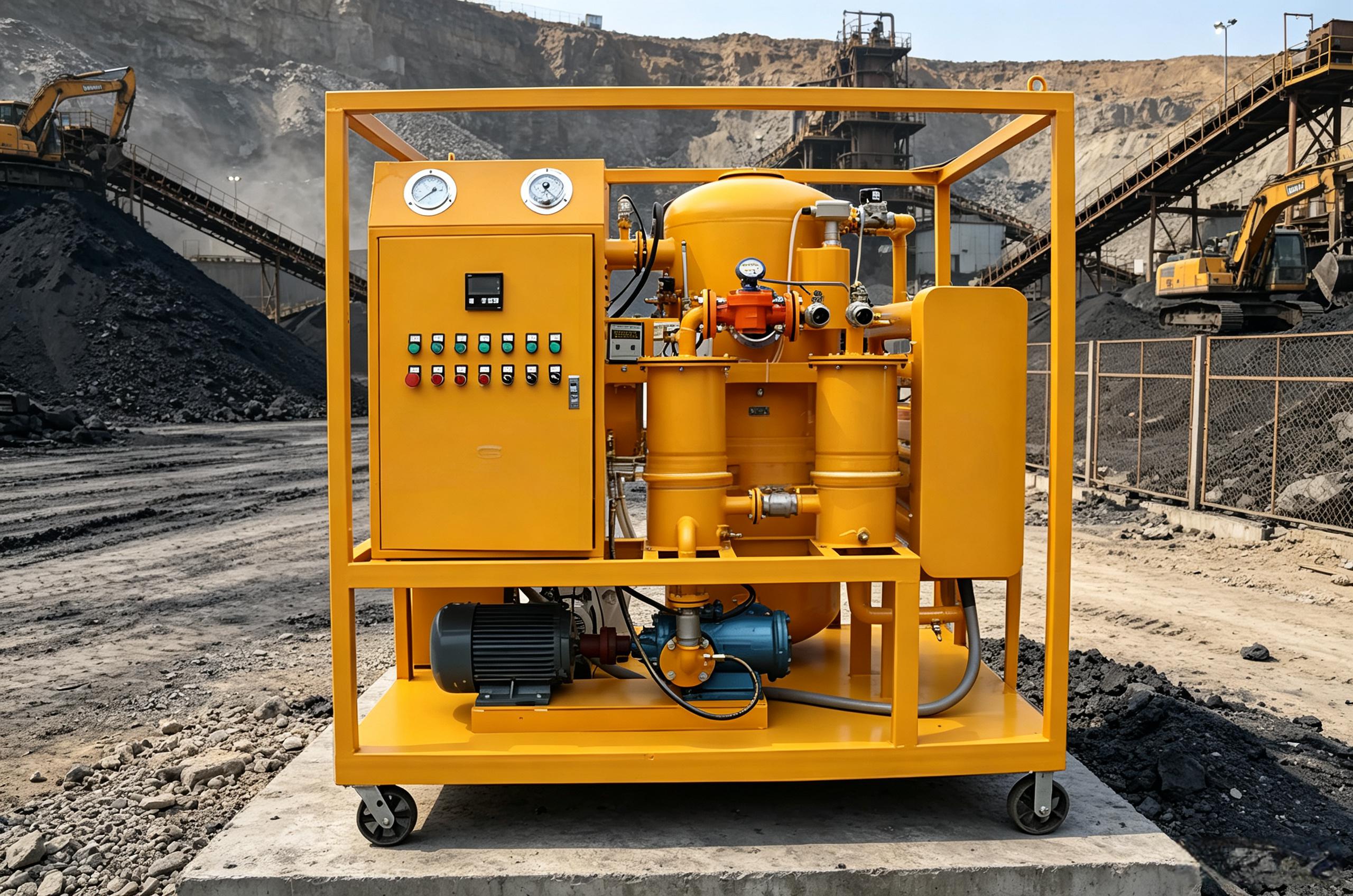
A vacuum transformer oil purifier heats the oil to a controlled temperature and exposes it to a vacuum environment. The reduced pressure lowers the boiling point of water, allowing moisture to evaporate and be removed from the oil.
The process can also remove dissolved gases while precision filters remove suspended particles.
For applications requiring deeper dehydration, a two-stage vacuum oil purifier with a Roots booster pump can provide a deeper working vacuum and enhanced moisture-removal capability.
Under suitable operating conditions, high-efficiency systems may achieve final water content of ≤3 ppm. Actual results depend on the initial oil condition, temperature, vacuum level, flow rate, and equipment configuration.
For more information, see our vacuum transformer oil purification equipment.
Vacuum dehydration is mainly intended to remove water and dissolved gases. If the transformer oil has also undergone significant oxidation, simply removing moisture may not restore its overall chemical condition.
When testing shows high acidity, sludge, oxidation products, or other signs of severe aging, additional oil regeneration or reconditioning may be required.
In heavily degraded cases, compare the cost and expected results of regeneration with oil replacement.
Oil replacement may be considered when the insulating oil is severely degraded and cannot be economically restored through purification or regeneration.
Before replacing the oil, however, identify and correct the source of moisture ingress. Otherwise, the new oil may become contaminated again.
Removing water is only part of the solution. Preventing moisture from entering the transformer is equally important.
| Prevention Method | Action | Typical Frequency |
|---|---|---|
| Breather Maintenance | Check desiccant condition and replace when saturated | Monthly or according to site conditions |
| Seal Inspection | Check gaskets, O-rings, fittings, and welds | Periodically |
| Oil Sampling | Test moisture and other oil-quality parameters | According to maintenance schedule |
| Nitrogen Blanket | Maintain the required positive pressure | Continuous monitoring |
Regular monitoring helps identify moisture ingress before it becomes a major oil-quality problem.
Vacuum dehydration is one of the most effective methods for removing dissolved and emulsified moisture from transformer oil. For heavily contaminated oil, vacuum dehydration is commonly combined with precision filtration and degassing.
Treatment time depends on the transformer oil volume, purifier capacity, initial moisture level, and target oil quality. A 10,000-liter transformer may require several hours of circulation and treatment with a properly sized purification system, but the actual processing time should be determined from the oil condition and equipment performance.
High moisture levels can increase insulation risks and reduce oil dielectric strength. Whether a transformer can remain in service should be determined by qualified personnel based on moisture content, BDV, load, temperature, transformer condition, and the manufacturer's operating requirements.
Excessive water in transformer oil is a manageable problem when it is detected and treated early.
The first step is to identify the source of moisture and accurately measure the oil's water content. Vacuum purification can then remove dissolved and emulsified moisture, while filtration and degassing help restore overall oil quality.
For applications requiring deeper dehydration, a two-stage vacuum oil purifier can provide enhanced moisture removal and degassing performance.
The most effective long-term strategy combines regular oil testing, proper breather and seal maintenance, and appropriate transformer oil purification equipment to keep moisture under control and protect transformer insulation.
Explosion-Proof Oil Purifier Selection Guide: Which Working Conditions Require One?
How to Prevent Rapid Lubricating Oil Degradation in Steel Mills
Can an Oil Purifier Remove Acid? Understanding the Limits of Oil Regeneration
Chemical Industry Oil Purification: How to Choose the Right Oil Purifier
Why Is Coalescing Water Removal More Stable Than Vacuum Dehydration?


