E-mail seo@sino-purification.com

Time:2026-03-25 15:54:45 Reading volume:
Vacuum degree is the most critical technical parameter in a transformer oil purifier. It directly determines how effectively the machine can remove moisture, dissolved gases, and other contaminants from insulating oil.
Industry data shows that improper vacuum levels account for nearly 40% of inadequate oil treatment results, leading to reduced dielectric strength, accelerated transformer aging, and unexpected failures. This guide explores how vacuum degree affects performance and what levels you need for your specific applications.
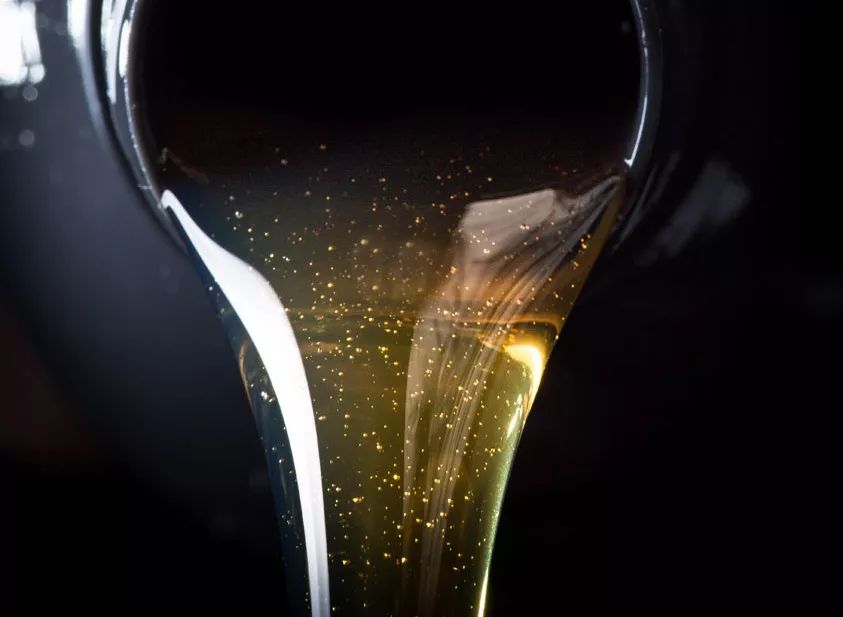
Dehydration Depth: Vacuum level determines how much dissolved water and gas is removed.
System Comparison: Two-stage systems achieve deeper vacuum (≤50 Pa) for high-voltage applications.
Moisture Targets: Achieving ≤3 ppm moisture requires deep vacuum.
Efficiency: Higher vacuum accelerates evaporation rates, reducing total treatment time.
BDV Recovery: Deeper vacuum yields higher dielectric strength (Breakdown Voltage).
Vacuum degree refers to the level of pressure reduction within the purifier's chamber. It is measured in Pascals (Pa) or millibar (mbar); lower numbers indicate a stronger vacuum.
| Vacuum Level | Typical Pressure | Application |
| Rough Vacuum | 1,000 – 100 Pa | Basic filtration, low-voltage transformers |
| Medium Vacuum | 100 – 10 Pa | Standard maintenance, ≤110 kV transformers |
| Deep Vacuum | ≤ 10 Pa | High-voltage (≥220 kV) critical assets |
Key Insight: The vacuum environment lowers the boiling point of water. This allows contaminants to evaporate at safe temperatures (50°C to 80°C) without damaging the oil's chemical structure.
Deeper vacuum enables the removal of dissolved water, which is held at a molecular level and is the hardest form of moisture to eliminate.
| Vacuum (Absolute) | Achievable Moisture | Typical Application |
| ≥ 100 Pa | 10 – 20 ppm | Distribution transformers |
| 50 – 100 Pa | 5 – 10 ppm | 110 kV transformers |
| 20 – 50 Pa | 3 – 5 ppm | 220 kV (New installations) |
| ≤ 20 Pa | ≤ 3 ppm | 500 kV critical assets |
Technical Recommendation: If your project requires moisture levels below 5 ppm, a two-stage vacuum system with a Roots booster pump is necessary.
Dissolved gases (oxygen, nitrogen, and combustibles) accelerate oxidation. Industry standards often require gas content below 0.2%, achievable only with vacuum levels consistently below 50 Pa.
| System Capability | Final BDV Result | Improvement Quality |
| Basic (≥100 Pa) | 45 – 55 kV | Moderate |
| Standard (50–100 Pa) | 55 – 65 kV | Good |
| Deep Vacuum (≤50 Pa) | 65 – 75 kV | Excellent |
| Feature | Single-Stage | Two-Stage |
| Pump Setup | Single rotary vane pump | Rotary vane + Roots booster |
| Stable Vacuum | 100 – 200 Pa | 20 – 50 Pa |
| Processing Time | 8 – 12 hours | 5 – 8 hours |
| Best For | Routine maintenance | High-voltage/Emergency |
Check the Gauge: Look for stable pressure. Fluctuations often indicate leaks or pump wear.
Ultimate vs. Working Vacuum: Ensure the machine maintains its "working vacuum" during actual oil flow, not just when empty.
Oil Testing: The final proof is in the ppm (moisture) and kV (BDV) laboratory results.
Slow Dehydration: Vacuum is likely too shallow. Check for air leaks or consider a two-stage upgrade.
High Oil Temps: If you must overheat the oil to remove water, your vacuum is insufficient.
Stalled BDV: Indicates dissolved gases are still present; increase degassing time or vacuum depth.
Vacuum degree is the foundation of oil purification. For utilities operating high-voltage equipment, investing in deep vacuum capability is an investment in the long-term reliability of the transformer.
Explosion-Proof Oil Purifier Selection Guide: Which Working Conditions Require One?
How to Prevent Rapid Lubricating Oil Degradation in Steel Mills
Can an Oil Purifier Remove Acid? Understanding the Limits of Oil Regeneration
Chemical Industry Oil Purification: How to Choose the Right Oil Purifier
Why Is Coalescing Water Removal More Stable Than Vacuum Dehydration?


