E-mail seo@sino-purification.com

Time:2026-03-04 14:46:17 Reading volume:
Abnormal noise or excessive vibration in an oil purifier is more than just a nuisance—it is a critical warning sign of potential mechanical failure. In marine and industrial environments, high-speed rotation can quickly escalate small issues into catastrophic damage.
This guide explores the most common causes of noise in purifiers (such as Alfa Laval or Mitsubishi models) and the technical solutions to restore smooth operation.
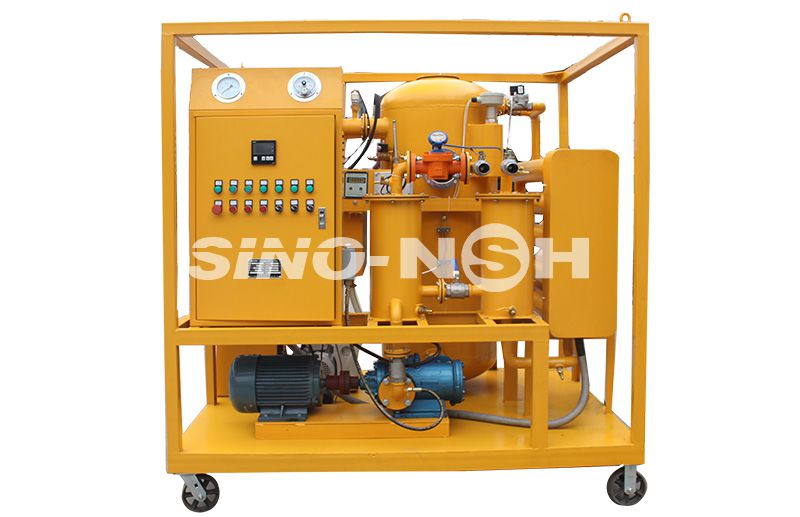
Symptoms: Heavy shaking of the frame, "walking" on the foundation, or a low-frequency rumble.
High-speed bowls operate on the principle of force. Even a few grams of weight discrepancy can generate massive forces.
Sludge Accumulation: Uneven buildup of heavy impurities in the bowl. Solution: Trigger a manual sludge discharge or perform a full bowl cleaning.
Incorrect Reassembly: Failure to align "match marks" on the bowl body and hood. Solution: Re-strip the bowl and ensure all components are aligned with the manufacturer’s marks.
Worn Dampers: The spring-loaded buffer springs or rubber dampers may be worn. Solution: Inspect and replace the vibration-absorbing springs.
Symptoms: A constant metallic scream or a sharp "whistle" that increases with RPM.
Bearing Wear: The vertical shaft bearings are under immense stress. If they lose lubrication or reach their "running hours" limit, they will begin to howl. Solution: replace both top and bottom bearings immediately.
Contaminated Gear Oil: Water or metal particles in the gear case will destroy the lubricating film. Solution: Drain the gear housing, flush with clean oil, and refill to the sight-glass midline.
Symptoms: Clunking during startup or a grinding sound during steady-state operation.
Worn Friction Pads: If the clutch pads are worn down, the motor cannot transfer torque efficiently, leading to "hunting" and thumping. Solution: Measure the thickness of the friction blocks; replace if below the minimum wear limit.
Worm Gear Pitting: The interface between the horizontal (drive) shaft and the vertical (bowl) shaft is a common point of failure. Solution: Inspect the worm wheel for thinning teeth or "pitting." Ensure the vertical shaft height is set correctly using the specific $k$-value (clearance) provided in your manual.
Symptoms: A "sucking" sound or erratic "rushing water" noises.
Air Entry: If air is sucked into the suction line, it causes cavitation in the pump. Solution: Check all O-rings and pipe couplings on the suction side for leaks.
Incorrect Gravity Disc: Using a disc with an incorrect inner diameter for the oil's specific gravity can cause an unstable "interface," leading to fluid turbulence. Solution: Recalculate the required gravity disc size based on the current oil temperature and density.
| Component | Inspection Frequency | Action |
| Gear Oil | Weekly | Check level and color (clarity). |
| Vibration Springs | Monthly | Inspect for breakage or loss of tension. |
| Friction Blocks | 2,000 Hours | Check for wear and oil contamination. |
| Bowl Internal | Every Cleaning | Verify alignment of "O" marks. |
This is usually due to improper assembly. If the bowl nut is not tightened to the correct torque or if a seal ring is pinched, the bowl will be slightly off-center. Always ensure the bowl is seated perfectly on the vertical shaft taper before tightening the main nut.
Safety Note: Never attempt to tighten or loosen any parts while the bowl is still rotating. Always wait for the "zero speed" indicator before opening the frame.
Explosion-Proof Oil Purifier Selection Guide: Which Working Conditions Require One?
How to Prevent Rapid Lubricating Oil Degradation in Steel Mills
Can an Oil Purifier Remove Acid? Understanding the Limits of Oil Regeneration
Chemical Industry Oil Purification: How to Choose the Right Oil Purifier
Why Is Coalescing Water Removal More Stable Than Vacuum Dehydration?


